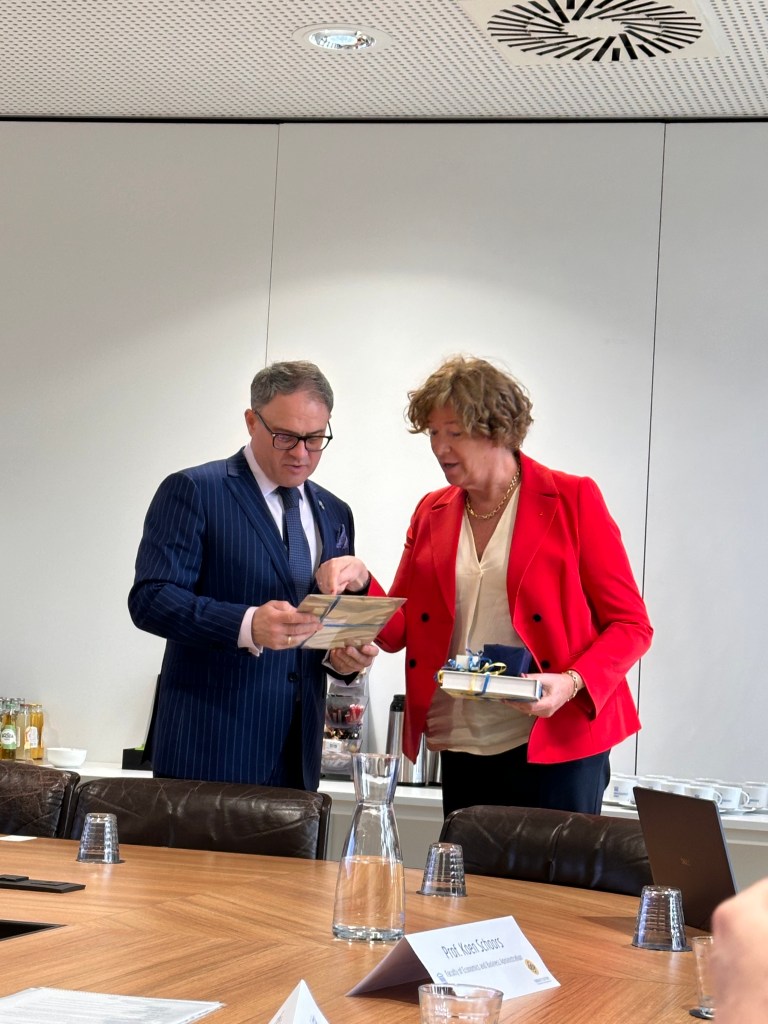
We are pleased to share highlights from a recent meeting with the Ambassador of the Republic of Kazakhstan and the Rector of Ghent University, focused on strengthening academic ties and advancing joint research activities between Kazakhstan and Ghent University.
Roman Vassilenko (Ambassador) and Prof. Petra De Sutter (Rector)
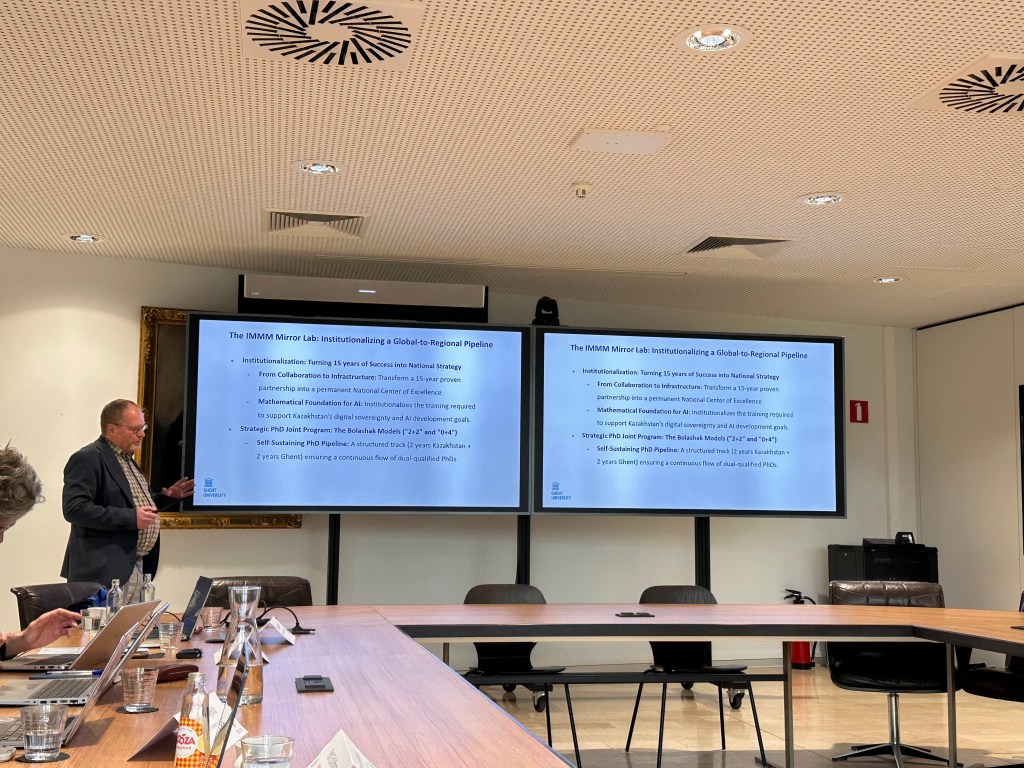
During the meeting, Prof. Michael Ruzhansky gave a brief presentation outlining our ongoing and planned collaboration in analysis and partial differential equations, emphasizing the scientific scope of the partnership and its potential for long-term impact. The discussion also covered concrete pathways for deeper cooperation, including research visits, joint events, and opportunities for early-career researchers.
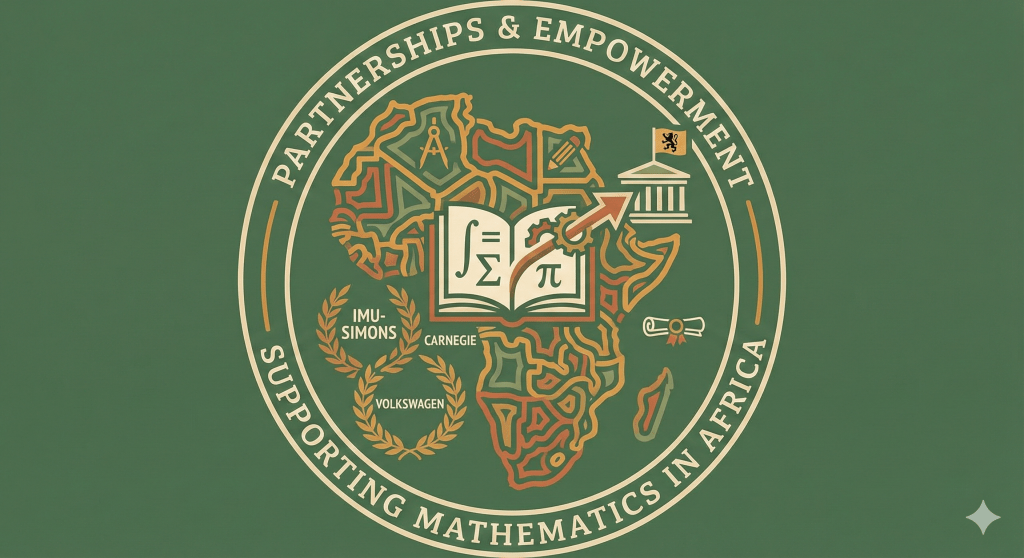
Over the past years, our research centre has maintained strong and sustained collaborations with mathematicians and academic institutions across Africa. These activities reflect our collective commitment to supporting mathematical research, advanced training, and international cooperation, particularly in regions where access to high-quality supervision remains limited.
Our engagement began several years ago with visits to the African Institute of Mathematical Sciences (AIMS) Ghana, where members of our centre contributed to graduate-level teaching through lecture courses for MSc and PhD students. Further activities included intensive lecture courses in Burkina Faso, supported by the Volkswagen Stiftung (Germany), carried out under challenging circumstances. Despite such difficulties, our group has continued to visit and collaborate with multiple African countries, focusing on capacity building and student support.
Some of these early activities are documented in a research volume edited by members of our group together with international collaborators:
In Ghana, our centre has developed lasting connections with the University of Ghana and the University of Cape Coast. Members of our group have visited both institutions multiple times, delivering advanced lectures and supporting MSc-level training.
Through a Carnegie Corporation of New York (CCNY) grant, Linda Botchway began her PhD at the University of Ghana in 2020. She had previously completed her MSc at AIMS Ghana under supervision linked to our centre, and her PhD work has been supervised within our research network:
After a delay due to maternity leave, her PhD thesis has now been submitted, and the defence is expected to take place soon.
Our collaboration with the University of Addis Ababa has also included PhD supervision and mentoring, sometimes outside formal joint PhD agreements. One such collaboration involved Atile Nega, whose PhD thesis was ready for submission when the COVID-19 pandemic began. Tragically, he passed away shortly before his public defence could be held online.
Many of the students mentioned above were supervised without formal joint-degree frameworks. These activities represent a sustained investment of time and effort by our centre, driven by the recognition that many exceptionally talented students in developing countries face structural barriers to adequate supervision. In several instances, students travelled for days to attend advanced mathematics lectures delivered by members of our group.
In addition to research supervision and teaching, Prof Michael Ruzhansky, for several years, served on the jury of the IBNI Prize for Africa, together with colleagues from France, contributing to the recognition of outstanding mathematical research on the African continent: https://www.idpoisson.fr/prix-ibni/
Overall, these activities demonstrate our centre’s long-standing commitment to fostering mathematical excellence, international collaboration, and equitable access to advanced mathematical training in Africa.
We are delighted to celebrate the successful PhD defense of Junqing Huang, who presented his dissertation on the topic:
“Variational Modeling and (Semi)-sparsity Generalizations for Image Analysis and Processing: Theory, Optimization and Applications“
Academic Achievement
Throughout these years, Junqing has shown exceptional commitment to his research, combining deep scientific curiosity with remarkable perseverance.
On a Personal Note
Beyond his academic excellence, Junqing has always brought warmth and positivity to our group. He is genuinely one of the kindest people you will meet — always smiling, always supportive.
Thanks to him, we now have beautiful group logos in multiple versions, and every new member’s photo appears in our cap thanks to his creativity and careful work.
Congratulations once again, Junqing! We are grateful for everything you contributed to our group and wish you the very best in the next chapter of your career.
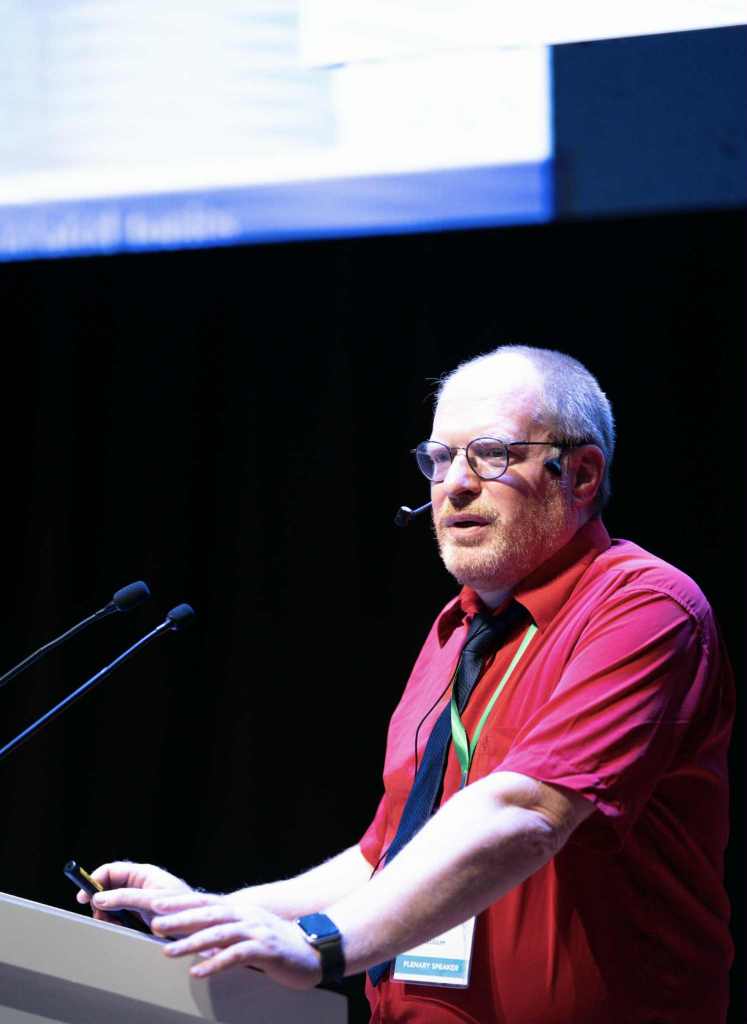
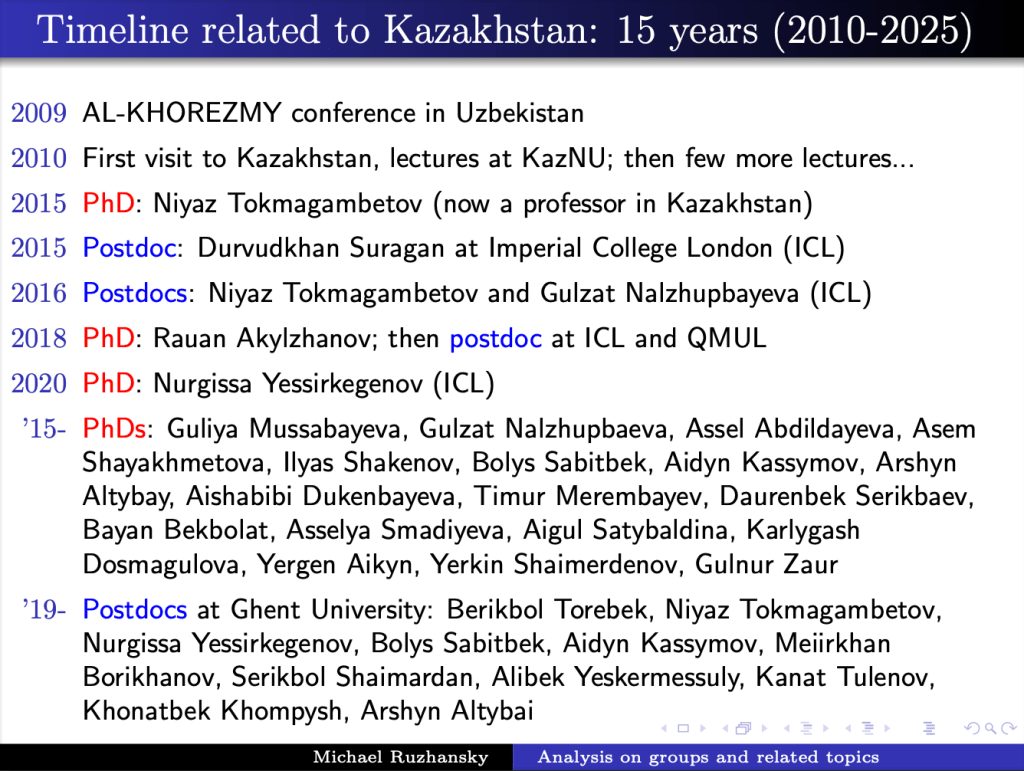
At the 15th ISAAC Congress in Astana, Prof. Michael Ruzhansky delivered a public lecture titled:
Analysis on Groups and Related Topics Collaboration with Kazakhstan.
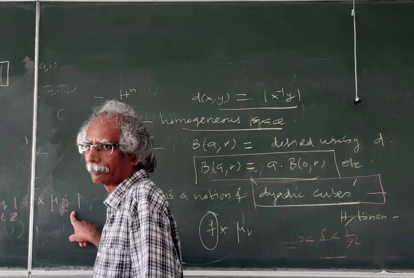
Prof. Ruzhansky shared the story of a remarkable 15-year journey (2010–2025) of academic collaboration with Kazakhstan. Starting from his first lectures at KazNU in 2010, this partnership has grown to include joint research, PhD supervision, and postdoctoral mentorship for many young Kazakhstani scholars.
The collaborations have produced significant results in:
Many of these works have been published in leading journals and collected in influential monographs, including Hardy Inequalities on Homogeneous Groups and Spectral Geometry of Partial Differential Operators.
This talk was more than a technical presentation — it was a celebration of friendship, mentorship, and the belief that mathematics knows no borders. The audience left inspired, reminded that sustained collaboration can transform both research landscapes and individual careers.
Here’s to the next 15 years of discovery and cooperation!
It is our pleasure to announce the next Ghent Methusalem Microlocal Day # 13, which will take place on Monday, 19 May 2025.
The Microlocal Day is an event featuring a brief and intensive series of lectures on various aspects of microlocal analysis and related topics. The program consists of both research presentations and survey lectures intended for researchers and PhD students interested in the field. Everyone is welcome to attend.
Title: Mixed normed estimates for the Cesaro means associated with the Dunkl-Hermite expansions
This Microlocal Day continues the tradition of Microlocal Days that we have been organising at Imperial College London, then continued at Ghent University. So, this Microlocal Day can be viewed as Microlocal Day #13.
Day 1: Leslokaal 3.1, S8, Campus Sterre, Ghent University
Day 2: Leslokaal 2.1, S8, Campus Sterre, Ghent University
Day 3 Morning: Leslokaal 3.1, S8, Campus Sterre, Ghent University
Day 3 Afternoon (Forum of Women in Mathematics): Leslokaal 1.4, S8, Campus Sterre, Ghent University
🔹 Registration: Free but mandatory – Please register your attendance via the following link: 👉 Registration & Program Updates (This information helps us prepare the official report for the Research Department at Ghent University.)
🔹 Workshop Opening: By Prof. Dr. Michael Ruzhansky, Head of the Ghent Analysis and PDE Center.
Topic: Scattering and Asymptotics for Critically Weakly Hyperbolic and Singular Systems Time: 14:30 – 15:30 CET (14 and 15 April, 2025) Where:Leslokaal 3.1 (Krijgslaan 281, Building S8, Ghent University)
We study a very general class of first-order linear hyperbolic systems that both become weakly hyperbolic and contain singular lower-order coefficients at a single time t = 0. In critically weakly hyperbolic settings, it is well-known that solutions lose a finite amount of regularity at t = 0. Here, we both improve upon the analysis in the weakly hyperbolic setting, and we extend this analysis to systems containing critically singular coefficients, which may also exhibit modified asymptotics and regularity loss at t = 0. In particular, we give precise quantifications for (1) the asymptotics of solutions as t approaches 0, (2) the scattering problem of solving the system with asymptotic data at t = 0, and (3) the loss of regularity due to the degeneracies at t = 0. Finally, we discuss a wide range of applications for these results, including weakly hyperbolic wave equations (and equations of higher order), as well as equations arising from relativity and cosmology (e.g. at big bang singularities). This is joint work with Bolys Sabitbek (QMUL).
Congratulations to Dr. Durvudkhan Suragan on being awarded the prestigious
Order of Kurmet
by the President of Kazakhstan! The Order of Kurmet (Order of Honour) is a state award established in 1993, recognizing outstanding contributions in the fields of economics, science, culture, social development, and education.
It is our pleasure to announce the next Ghent Methusalem Microlocal Day # 12, which will take place on Tuesday, 8 April 2025.
The Microlocal Day is an event featuring a brief and intensive series of lectures on various aspects of microlocal analysis and related topics. The program consists of both research presentations and survey lectures intended for researchers and PhD students interested in the field.
11:05-11:50.Sergo Yepiskoposyan (National Polytechnic University of Armenia, Armenia)
Title:Orthonormal Systems and Greedy Algorithms
Abstract: The lecture will present classical orthonormal systems such as Rademacher, Walsh, Haar, Christenson-Levy systems and their properties. As well as greedy algorithms for these systems. Convergence results of the greedy algorithm for the Walsh system in the spaces $L^1[0,1)$ and $L_{\mu}^1[0,1)$ will be presented.
Abstract: We will discuss the wave equations that becomes weakly hyperbolic and singular at time t = 0. We provide precise quantifications for the asymptotics of solutions as t approaches 0, the scattering problem and the loss of regularity caused by the degeneracies at t = 0.
15:40-16:00. Aidyn Kassymov (Institute of Mathematics and Mathematical Modelling, Kazakhstan):
Title: On fractional inequalities on metric measure spaces with polar decomposition
Abstract: In this paper, we prove the fractional Hardy inequality on polarisable metric measure spaces. The integral Hardy inequality for 1<p≤q<∞ is playing a key role in the proof. Moreover, we also prove the fractional Hardy-Sobolev type inequality on metric measure spaces. In addition, logarithmic Hardy-Sobolev and fractional Nash type inequalities on metric measure spaces are presented. In addition, we present applications on homogeneous groups and on the Heisenberg group. (joint paper with M. Ruzhansky and G. Zaur).
16:00 – Closing.
This Microlocal Day continues the tradition of Microlocal Days that we have been organising at Imperial College London, then continued at Ghent University. So, this Microlocal Day can be viewed as Microlocal Day #12.
Topic: A brief introduction to modulation spaces on the Heisenberg group Time: Thursday, 3rd April, 2 PM – 4 PM CEST
Friday, 4th April, 10 AM – 12 PM CEST Where:Leslokaal 3.1 (Krijgslaan 281, Building S8, Ghent University)
The lecture begins with a review of the definition of modulation spaces on R^n, reformulated using the Bargmann transform. It then introduces twisted modulation spaces through the twisted Bargmann transform. Finally, modulation spaces on the Heisenberg group are presented as direct integrals of twisted modulation spaces. The lecture concludes with a discussion of some fundamental properties of these spaces.







 Ghent Analysis & PDE Center