King Philippe and Queen Mathilde visit highlights our Mathematics and AI mirror laboratory in Kazakhstan

On 13 October 2026, our mirror laboratory in mathematics and artificial intelligence was presented to King Philippe, Queen Mathilde and President Kassym-Jomart Tokayev during their visit to Alem.ai in Astana. Ghent University Rector Petra De Sutter also participated in the visit, bringing the initiative into the programme of the Belgian state visit to Kazakhstan.
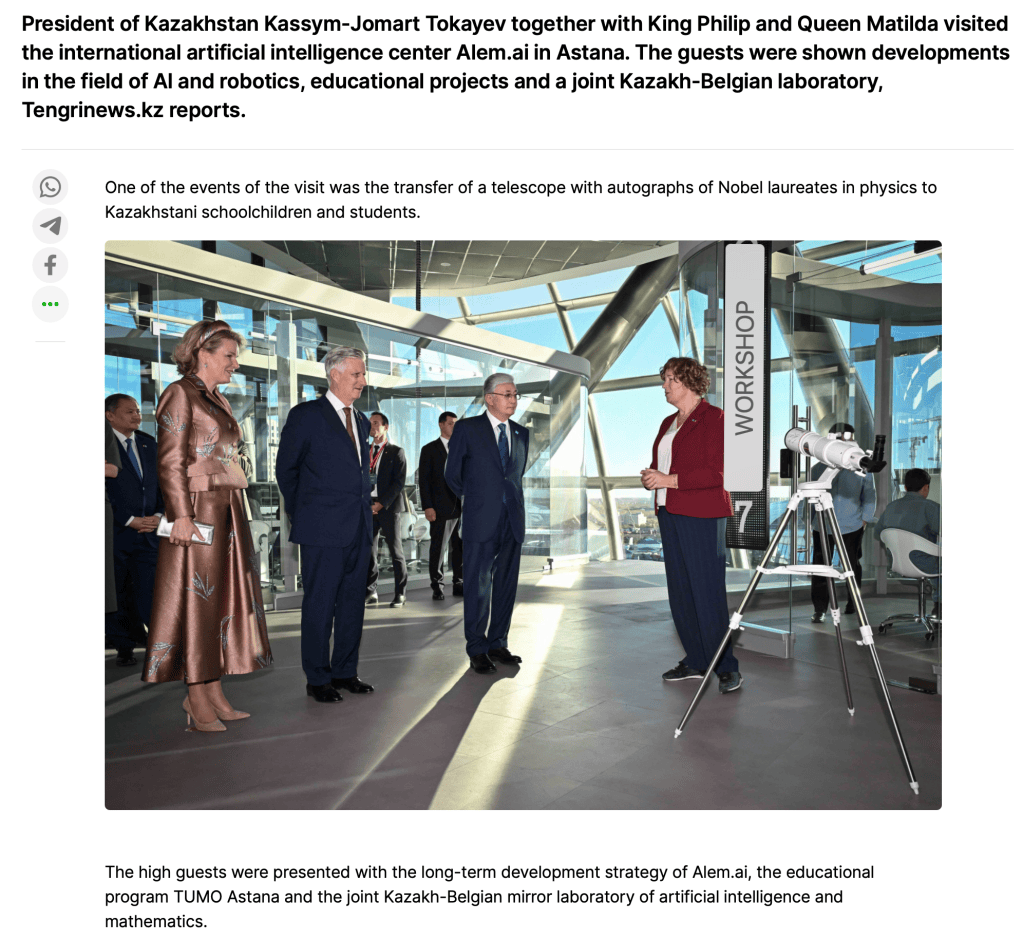
Queen Mathilde, King Philippe, President Tokayev and Rector Petra De Sutter at Alem.ai. Photo credit Akorda, reproduced in Tengrinews. Read the report

Developing our mirror laboratory

Michael Ruzhansky proposed the initiative to Rector Petra De Sutter during the rectorial mission to Kazakhstan and Uzbekistan in November 2025. With her strong support, our Ghent Analysis & PDE Center worked with the rectorate, Anna Sashchenko of UGent’s Eureast Platform, the Institute of Mathematics and Mathematical Modeling in Almaty, and Alem.ai in Astana to develop the partnership.

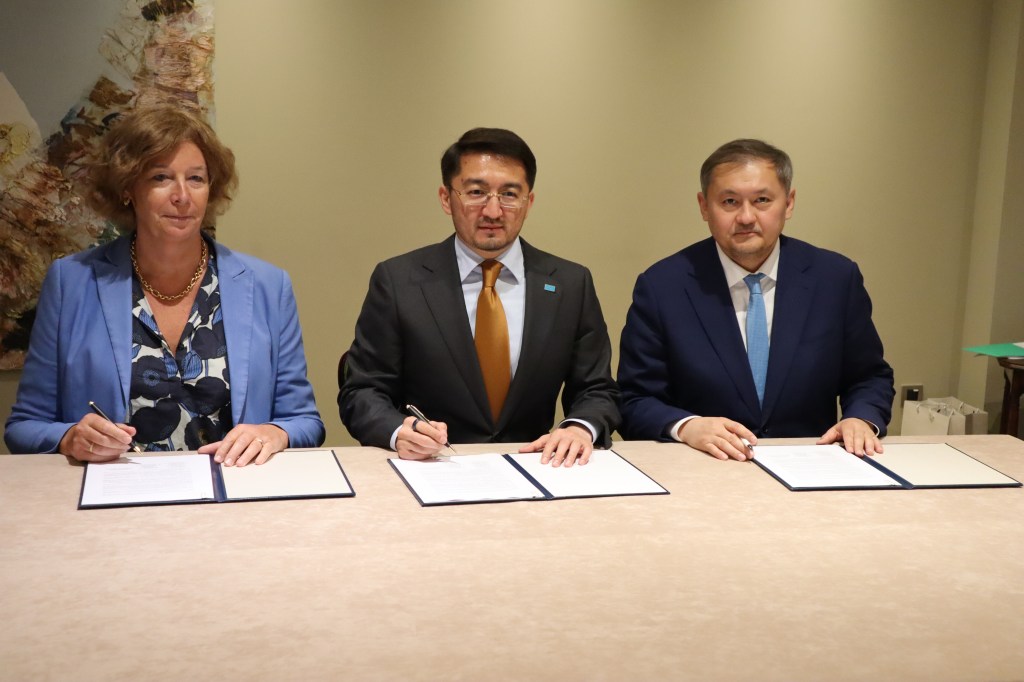
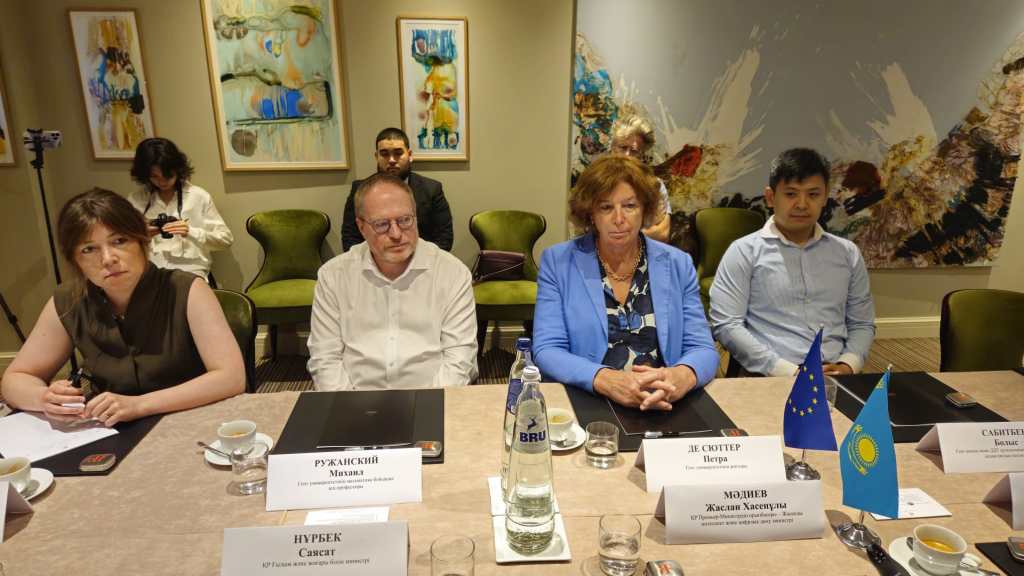
A Memorandum of Understanding was signed in Brussels on 22 June 2026 by the UGent Rector and Kazakhstan’s ministers responsible for science and for AI and digital development. See our earlier announcement.

Discussing the Ghent–Alem.ai agreement, Kazakhstan’s Minister of Science and Higher Education, Sayasat Nurbek, stated: “Belgian specialists are especially strong in algorithms and mathematical modeling.” (Qazinform, 12 October 2026)

Our mirror laboratory in coverage of the royal visit
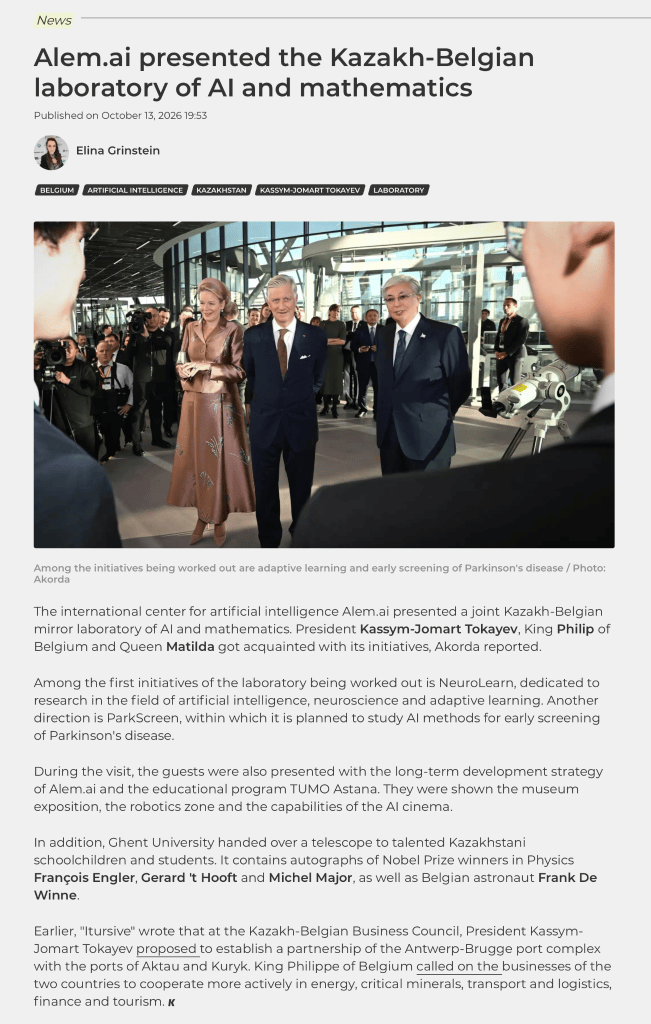
Kursiv’s report on the laboratory’s presentation during the royal visit, published 13 October 2026. Photograph credited to Akorda. Read the original article

Mathematics and AI developed at Ghent

The Kazakhstan laboratory is our second international laboratory in mathematics, following the existing since 2023 remote laboratory in Armenia. It is conceived as a remote extension of the Ghent Analysis & PDE Center, funded externally (our remote laboratory grants in Armenia are about 1,000,000 USD), with a research programme under our scientific direction from our center. Its remit covers mathematical analysis and partial differential equations, artificial intelligence, modelling and engineering computation, connecting fundamental research with applications.

The Parkinson’s screening direction highlighted in the news coverage builds on research developed in our group at Ghent. Xuechao Wang carried out his doctoral research here under Michael Ruzhansky’s supervision, supported first by his FWO Odysseus grant and then by Methusalem. Professor Sven Nõmm of Tallinn University of Technology (TalTech), Estonia, was external co-supervisor. Junqing Huang contributed to all five published Parkinson’s papers and shared first authorship of the LSTM-CNN study.

This work develops efficient neural networks for analysing dynamic handwriting signals and explainable AI methods that identify which parts of a handwriting trajectory influence a prediction. It provides a research foundation for further work on Parkinson’s screening, with broader clinical validation needed before medical use. The laboratory’s programme extends beyond Parkinson’s disease to wider questions in mathematics and AI.

Our biomedical imaging research also includes a 2020 study of cervical cancer patients. Working with oncology researchers, Michael Ruzhansky and Junqing Huang contributed mathematical image processing to microscopy images of red blood cells from patients undergoing radiotherapy. The methods helped clarify nanoparticle boundaries for measurement.

Within UGent, our collaboration with Professor Andre Skirtach and Dr Bogdan Parakhonskiy at the Laboratory for NanoBioTechnology includes particle-image segmentation from very small datasets. This published joint work connects mathematical and AI methods with experimental microscopy.

Selected research and doctoral work

Xuechao Wang, Junqing Huang, Marianna Chatzakou, Kadri Medijainen, Pille Taba, Aaro Toomela, Sven Nõmm and Michael Ruzhansky. A Light-weight CNN Model for Efficient Parkinson’s Disease Diagnostics. IEEE CBMS (2023), 616–621.

Xuechao Wang, Junqing Huang, Marianna Chatzakou, Sven Nõmm, Elli Valla, Kadri Medijainen, Pille Taba, Aaro Toomela and Michael Ruzhansky. Comparison of one- two- and three-dimensional CNN models for drawing-test-based diagnostics of the Parkinson’s disease. Biomedical Signal Processing and Control 87 (2024), 105436.

Xuechao Wang, Junqing Huang, Marianna Chatzakou, Kadri Medijainen, Aaro Toomela, Sven Nõmm and Michael Ruzhansky. LSTM-CNN: An efficient diagnostic network for Parkinson’s disease utilizing dynamic handwriting analysis. Computer Methods and Programs in Biomedicine 247 (2024), 108066.

Xuechao Wang, Sven Nõmm, Junqing Huang, Marianna Chatzakou and Michael Ruzhansky. An Efficient Neural Network for the Diagnosis of Parkinson’s Disease Using Dynamic Handwriting Analysis. Extended Abstracts MWCAPDE 2023, Birkhäuser (2024), 97–104.

Xuechao Wang, Sven Nõmm, Junqing Huang, Kadri Medijainen, Aaro Toomela and Michael Ruzhansky. PointExplainer: Towards transparent Parkinson’s disease diagnosis. Information Fusion 129 (2026), 104064.

Sargylana Mamaeva, Irina Kononova, Michael Ruzhansky, Petr Nikiforov, Nadezhda Nikolaeva, Alexandr Pavlov, Nyurguyna Fedorova, Junqing Huang, Motrena Semenova, Daiaana Barashkova, Lyubov Frolova and Georgy Maksimov. Using Scanning Electron Microscopy and Atomic Force Microscopy to Study the Formation of Nanoparticles on Red Blood Cell Surface in Cervical Cancer Patients. International Journal of Biomedicine 10(1) (2020), 70–75.

Marianna Chatzakou, Junqing Huang, Bogdan Parakhonskiy, Michael Ruzhansky, Andre Skirtach, Junnan Song and Xuechao Wang. Performing Particle Image Segmentation on an Extremely Small Dataset. Extended Abstracts 2021/2022: Ghent Analysis and PDE Seminar, Birkhäuser (2024), 295–304.

Xuechao Wang. Deep Learning for Dynamic Handwriting Analysis: Multi-Dimensional, Efficient, and Explainable Diagnosis of Parkinson’s Disease. Ghent University doctoral thesis, defended 23 January 2026.

Sources

A Landmark Partnership in the Mathematical Sciences

We are delighted to announce that on 22 June 2026, in Brussels, a Memorandum of Understanding was signed between the Minister of Artificial Intelligence and Digital Development of the Republic of Kazakhstan, the Minister of Science and Higher Education of the Republic of Kazakhstan, and the Rector of Ghent University.

At the heart of this agreement lies an exciting new initiative: the establishment of a Mirror Laboratory in Kazakhstan to our Ghent Analysis & PDE Centre. It will focus on matching research to what is done in Ghent, in the fields of mathematics, artificial intelligence, modelling, and engineering computation. Based at the International Center for Artificial Intelligence Alem AI, the Mirror Lab is a joint venture of the Ghent Analysis & PDE Center at Ghent University and the Institute of Mathematics and Mathematical Modeling, uniting two leading research communities under one shared ambition.

The partnership opens the door to joint research projects, academic exchanges and research internships, including through the Bolashak International Scholarship Programme, and a vibrant programme of conferences, seminars, and workshops connecting researchers in Kazakhstan and at Ghent University. Notably, researchers will be free to contribute remotely or from their home institutions, reflecting a modern, open vision of scientific collaboration.

This is a milestone moment — the beginning of a long and fruitful chapter in mathematical sciences, built on equality, academic freedom, and a shared commitment to discovery.

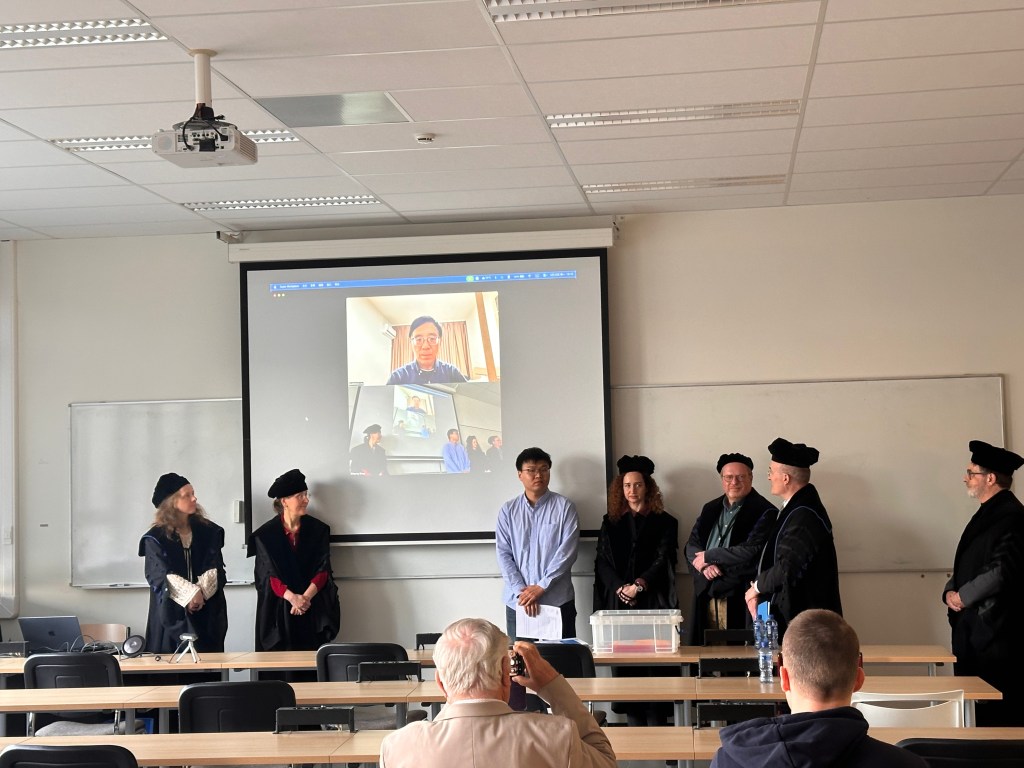
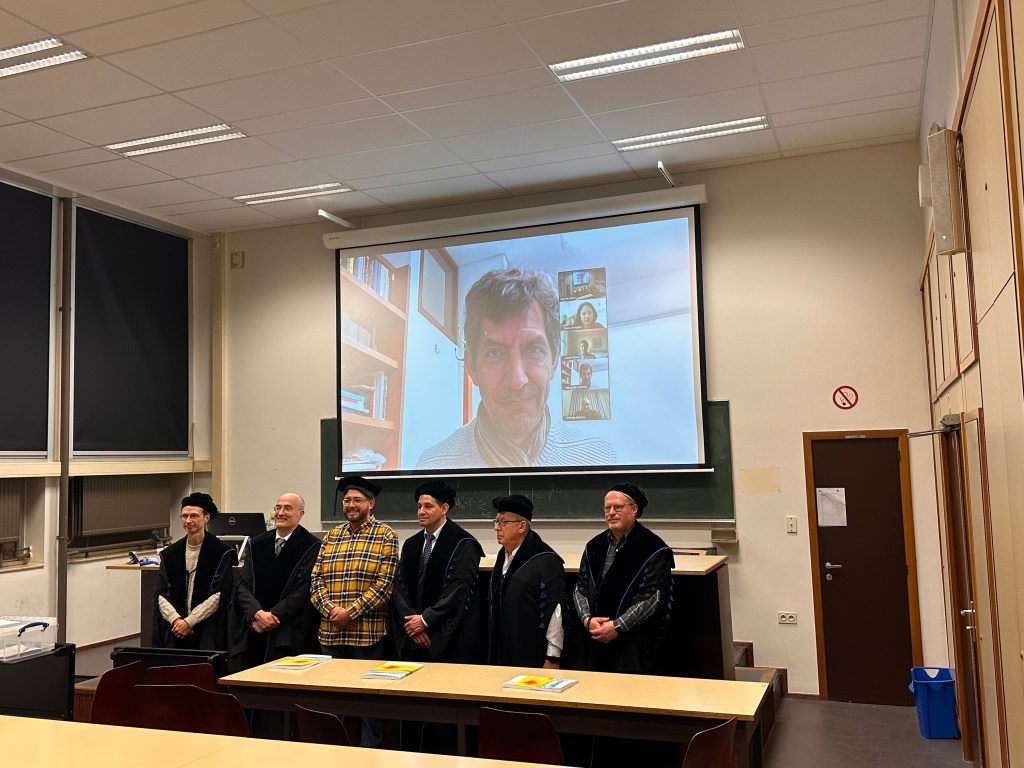
Congratulations to Dr. Zhipeng Song!

We are delighted to celebrate the successful PhD defense of Zhipeng, who presented his dissertation on the topic:

Multipliers on Lie Groups of exponential growth

We wish Zhipeng every success in his future academic endeavors. May his mathematical journey be marked by impactful discoveries, fruitful collaborations, and continued contributions to the advancement of our field.

Supervisors: Prof. Yulia Kuznetsova and Prof. Micheal Ruzhansky

Examiners: Prof. Jean-Philippe Anker, Dr. Marianna Chatzakou, Prof. Olivier Fouquet, Prof. Angela Pasquale, Prof. Quanhua Xu.

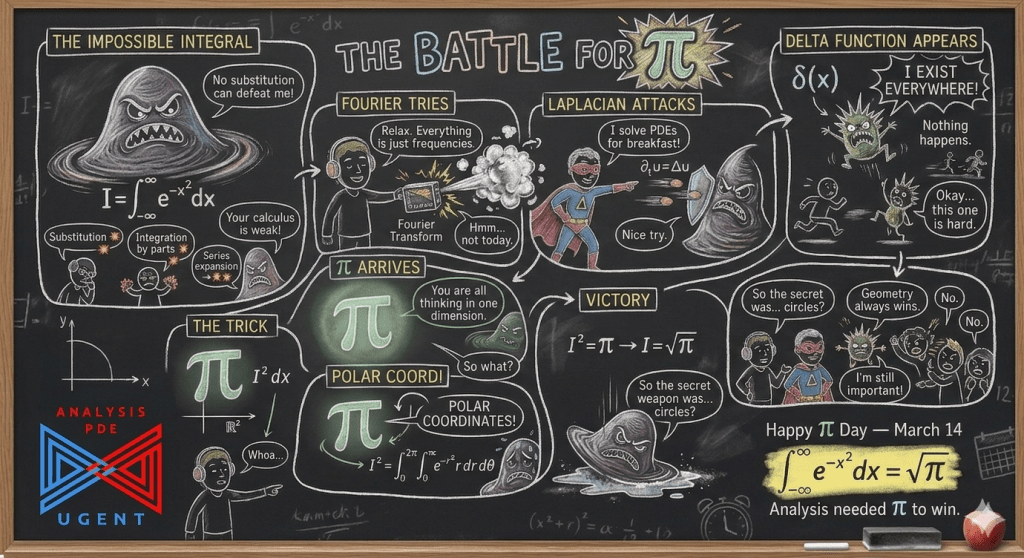
Why does Analysis need π?

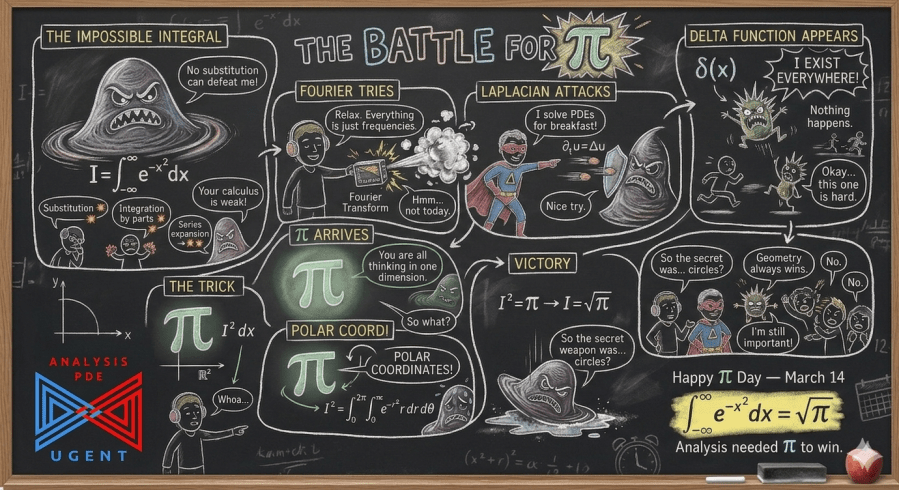
Ever wondered why the square root of π appears in the most unexpected places in Analysis and PDEs?

Once upon a time in the Land of Analysis, there lived a terrifying, seemingly unsolvable Gaussian integral, mocking all who dared challenge it. The mightiest heroes of Partial Differential Equations, Fourier, the masked superhero Laplacian, and even the chaotic gremlin Delta Function, were each defeated by their resepected weak-points.

Just when hope was lost, the wise, ancient sage π ARRIVES, revealing the ultimate “The Trick.” By teaching the mathematicians to “think in two dimensions” and use the geometry of Polar Coordinates, π unlocked the power of the circle. The battlefield rotated, the monster collapsed, and the secret weapon was revealed… it was circles all along! Happy Pi Day!

Image generated by Gemini AI (Bolys Sabitbek)

Happy Pi Day from Ghent Analysis & PDE Center!

#PiDay2026 #Mathematics #GaussianIntegral #PDE

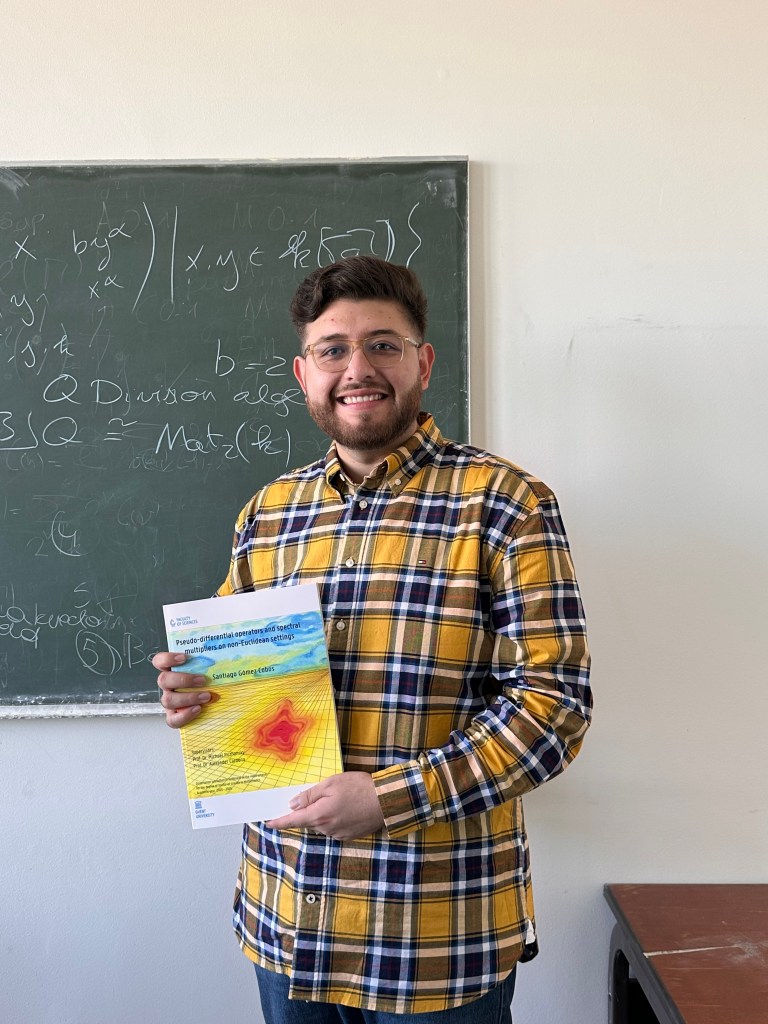
Congratulations to Dr. Santiago Gómez Cobos!

We are delighted to celebrate the successful PhD defense of Santiago, who presented his dissertation on the topic:

Pseudo-differential operators and spectral multipliers on non-Euclidean settings

Academic Achievement

Throughout these years, Santiago has demonstrated an outstanding level of dedication to his research, characterized by profound scientific curiosity and notable perseverance. His work has been published in prestigious journals, including the Journal of the London Mathematical Society and the Comptes Rendus de l’Académie des Sciences (Paris), reflecting the high quality and impact of his contributions to the field.

Santiago has contributed to the Banach Space and Banach Algebra course over the past three years by leading exercise sessions and assisting students in developing a deeper understanding of the material through carefully prepared problems and practical applications.

We wish Santiago every success in his future academic endeavors. May his mathematical journey be marked by impactful discoveries, fruitful collaborations, and continued contributions to the advancement of our field.

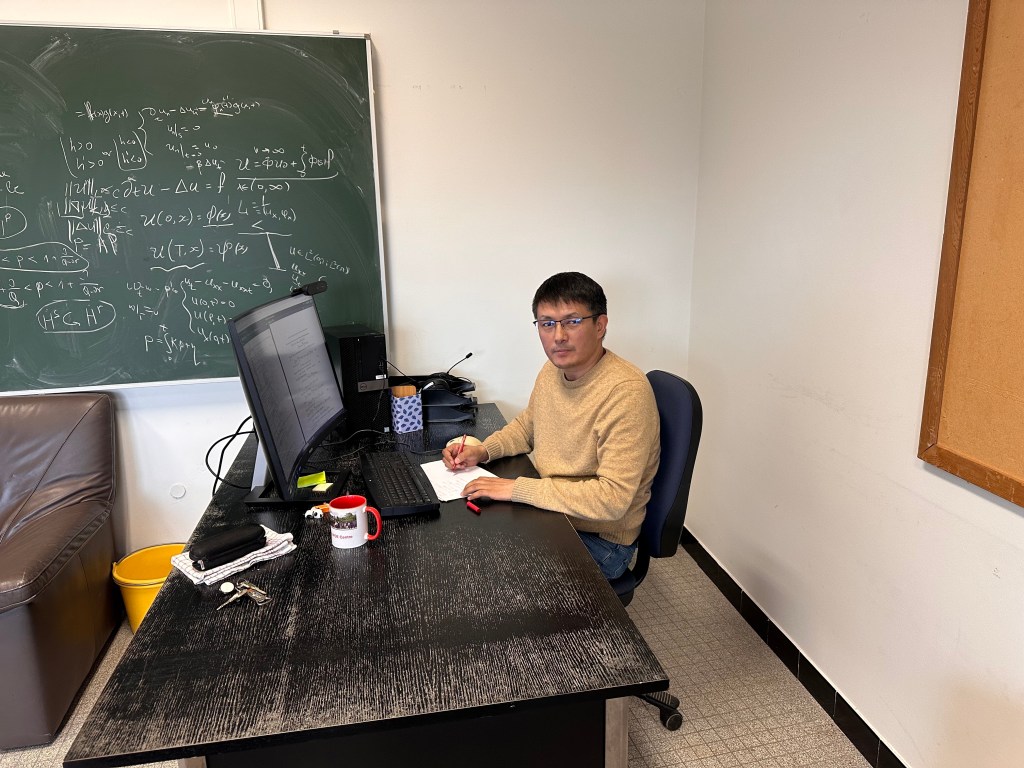
A Warm Goodbye to Dr. Arshyn Altybay!

After 18 wonderful months in our research group, we are saying farewell to Arshyn as he begins his next chapter.

Arshyn, thank you for the dedication, the ideas, and the steady, positive energy you brought into our research center.

In these 18 months you were remarkably productive: seven preprints took shape during your stay, and you also won a research grant in Kazakhstan. That kind of focus is rare—and it lifted the pace of the whole group. Your work, and the way you shared it, made a clear difference.

As you move on, we wish you good luck and continued success. We hope you keep this momentum, find new problems worth your attention, and keep building strong collaborations around you.

Our Centre’s Long-Term Engagement with the African Mathematical Community

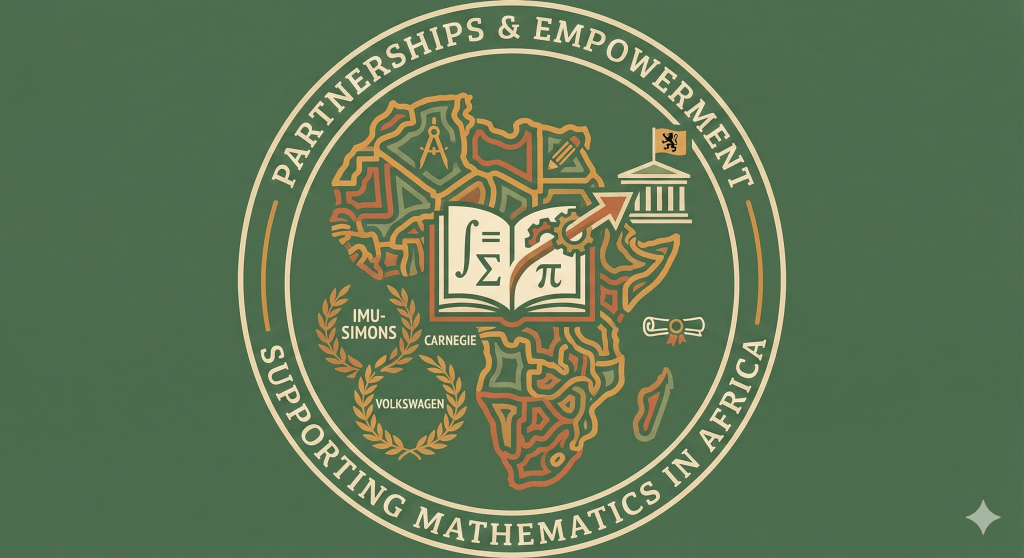
Over the past years, our research centre has maintained strong and sustained collaborations with mathematicians and academic institutions across Africa. These activities reflect our collective commitment to supporting mathematical research, advanced training, and international cooperation, particularly in regions where access to high-quality supervision remains limited.

Our engagement began several years ago with visits to the African Institute of Mathematical Sciences (AIMS) Ghana, where members of our centre contributed to graduate-level teaching through lecture courses for MSc and PhD students. Further activities included intensive lecture courses in Burkina Faso, supported by the Volkswagen Stiftung (Germany), carried out under challenging circumstances. Despite such difficulties, our group has continued to visit and collaborate with multiple African countries, focusing on capacity building and student support.

Some of these early activities are documented in a research volume edited by members of our group together with international collaborators:

https://link.springer.com/book/10.1007/978-3-030-05657-5

After our centre’s activities expanded to Ghent University, these collaborations continued and strengthened. Notable examples include:

In Ghana, our centre has developed lasting connections with the University of Ghana and the University of Cape Coast. Members of our group have visited both institutions multiple times, delivering advanced lectures and supporting MSc-level training.

Through a Carnegie Corporation of New York (CCNY) grant, Linda Botchway began her PhD at the University of Ghana in 2020. She had previously completed her MSc at AIMS Ghana under supervision linked to our centre, and her PhD work has been supervised within our research network:

After a delay due to maternity leave, her PhD thesis has now been submitted, and the defence is expected to take place soon.

Our collaboration with the University of Addis Ababa has also included PhD supervision and mentoring, sometimes outside formal joint PhD agreements. One such collaboration involved Atile Nega, whose PhD thesis was ready for submission when the COVID-19 pandemic began. Tragically, he passed away shortly before his public defence could be held online.

Many of the students mentioned above were supervised without formal joint-degree frameworks. These activities represent a sustained investment of time and effort by our centre, driven by the recognition that many exceptionally talented students in developing countries face structural barriers to adequate supervision. In several instances, students travelled for days to attend advanced mathematics lectures delivered by members of our group.

In addition to research supervision and teaching, Prof Michael Ruzhansky, for several years, served on the jury of the IBNI Prize for Africa, together with colleagues from France, contributing to the recognition of outstanding mathematical research on the African continent:
https://www.idpoisson.fr/prix-ibni/

Overall, these activities demonstrate our centre’s long-standing commitment to fostering mathematical excellence, international collaboration, and equitable access to advanced mathematical training in Africa.


Congratulations to Dr. Vishvesh Kumar — Assistant Professor at IIT BHU Varanasi

We are delighted to congratulate Dr. Vishvesh Kumar on his new position at Department of Mathematical Sciences at IIT BHU Varanasi as an Assistant Professor. This is a wonderful milestone in his academic career, and a moment of pride for all of us at the Ghent Analysis & PDE Center.

Since joining our group as a postdoctoral researcher at Ghent University, Dr. Kumar has been an active and inspiring member of our community. Working within the Department of Mathematics: Analysis, Logic and Discrete Mathematics and the Ghent Analysis & PDE Center headed by Prof. Michael Ruzhansky, he has contributed significantly to our core areas of research.  

Research contributions in our group

Dr. Kumar’s research lies at the intersection of abstract harmonic analysis, pseudo-differential operators, geometric analysis, and partial differential equations on Lie groups.  

During his time in Ghent, he has:

  • Co-authored numerous papers on nonlocal and subelliptic problems on stratified Lie groups, including work on Brezis–Nirenberg type problems, critical equations, and fractional Sobolev-type inequalities.  
  • Made substantial contributions to the theory of damped and fractional wave equations on graded and stratified Lie groups, including results for higher order hypoelliptic equations with data in negative order Sobolev spaces.  
  • Advanced functional inequalities and harmonic analysis on symmetric spaces and hypergroups, with applications to Fourier multipliers, Strichartz estimates, and related analytic inequalities.  

His work has appeared, or is forthcoming, in several respected international journals such as Journal of Evolution Equations, Mathematische Annalen, Journal of Geometric Analysis, Israel Journal of Mathematics, and others, reflecting both the depth and breadth of his contribution to our field.  

A valued colleague

On a personal level, Vishvesh has been a generous collaborator and a supportive colleague. His willingness to discuss ideas, share expertise, and encourage younger researchers and visitors has left a strong and positive impression in our group. Many of us have benefited from his clarity of thought, his calm problem-solving approach, and his enthusiasm for mathematics.


Looking ahead

While we will miss having him at the Ghent Analysis & PDE Center, we are equally excited to see him take this next step as an Assistant Professor at IIT BHU Varanasi. We are confident that he will continue to build a vibrant research program, inspire students, and develop new collaborations that will further strengthen the links between our institutions.

Warm words from Dr Kumar about group

Congratulations to Dr Junqing Huang!

We are delighted to celebrate the successful PhD defense of Junqing Huang, who presented his dissertation on the topic:

“Variational Modeling and (Semi)-sparsity Generalizations for Image Analysis and Processing: Theory, Optimization and Applications“

Academic Achievement

Throughout these years, Junqing has shown exceptional commitment to his research, combining deep scientific curiosity with remarkable perseverance.

On a Personal Note

Beyond his academic excellence, Junqing has always brought warmth and positivity to our group. He is genuinely one of the kindest people you will meet — always smiling, always supportive.

Thanks to him, we now have beautiful group logos in multiple versions, and every new member’s photo appears in our cap thanks to his creativity and careful work.

Congratulations once again, Junqing! We are grateful for everything you contributed to our group and wish you the very best in the next chapter of your career. 

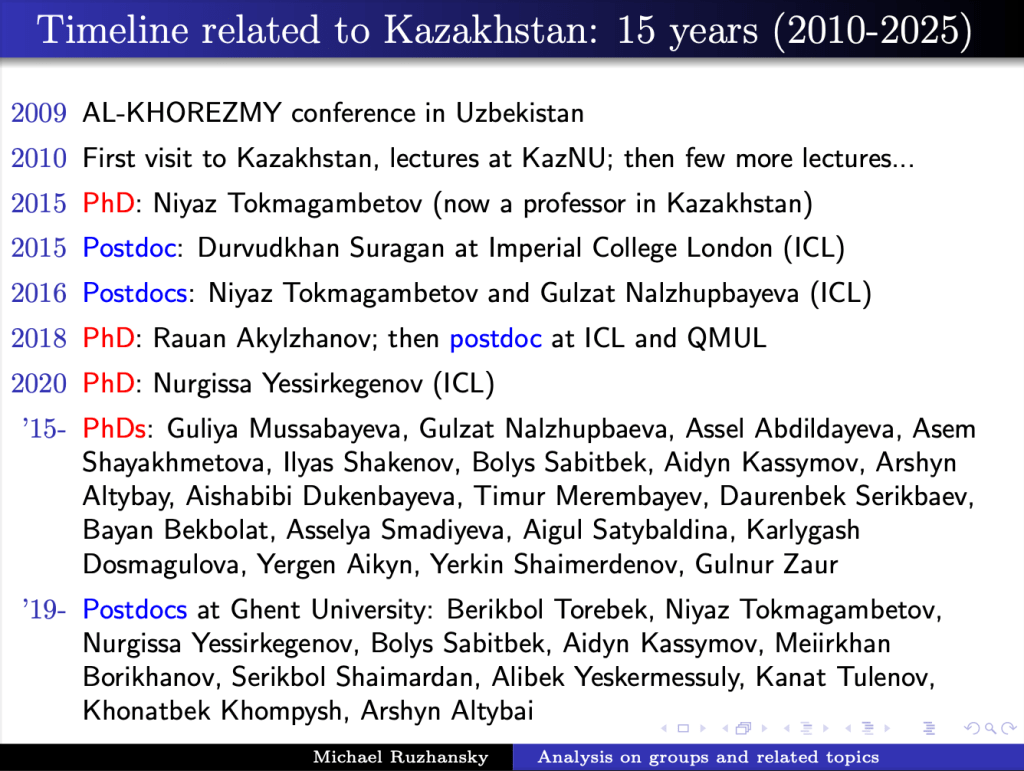
Celebrating 15 Years of Collaboration Between Michael Ruzhansky and Kazakhstan’s Mathematicians

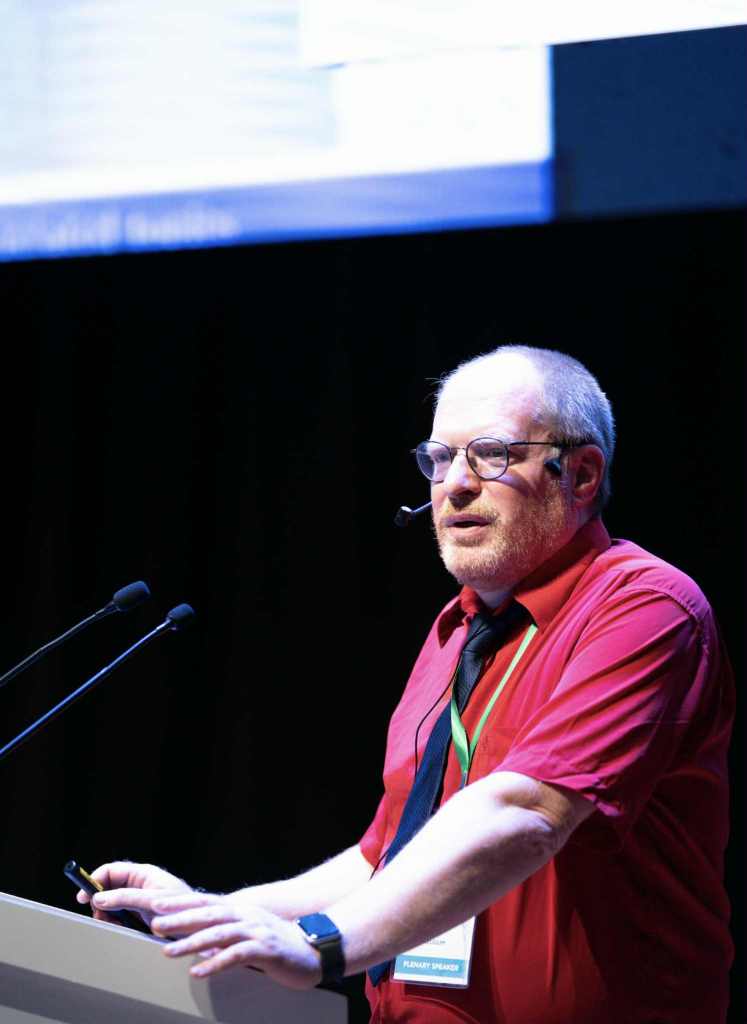
At the 15th ISAAC Congress in Astana, Prof. Michael Ruzhansky delivered a public lecture titled: 

Analysis on Groups and Related Topics 
Collaboration with Kazakhstan.

Prof. Ruzhansky shared the story of a remarkable 15-year journey (2010–2025) of academic collaboration with Kazakhstan. Starting from his first lectures at KazNU in 2010, this partnership has grown to include joint research, PhD supervision, and postdoctoral mentorship for many young Kazakhstani scholars.

The collaborations have produced significant results in:

  • Spectral Geometry and subelliptic BVPs: + Suragan, Kalmenov, Sadybekov, Sabitbek, ….
  • Hardy, Rellich, Sobolev, CKN inequalities (weighted, anisotropic, fractional, critical cases): + Suragan, Kassymov, Yessirkegenov, Sabitbek, ….
  • Fourier multipliers and analysis on groups: + Nursultanov, Akylzhanov, Tulenov, Shaimardan
  • Nonharmonic analysis: + Tokmagambetov, Torebek, …
  • Very weak solutions: + Tokmagambetov, Alybay, Yessirkegenov, Shaimardan, Yeskermessuly, …
  • Heat equations: Torebek, Borikhanov, Turmetov, Kompysh, Kassymov, ….
  • Inequalities on Lie groups, measuring spaces: + Suragan, Kassymov, Yessirkegenov, Zaur

Many of these works have been published in leading journals and collected in influential monographs, including Hardy Inequalities on Homogeneous Groups and Spectral Geometry of Partial Differential Operators.

This talk was more than a technical presentation — it was a celebration of friendship, mentorship, and the belief that mathematics knows no borders. The audience left inspired, reminded that sustained collaboration can transform both research landscapes and individual careers.

Here’s to the next 15 years of discovery and cooperation!