During this times, when conferences and workshops are held online, it is a good chance to experiment with visual books of abstracts. See the book of abstracts movie for the workshop that we have just organised:
Book of Abstracts MOVIE
Intercontinental research group in Analysis and PDE centred at Ghent University


During this times, when conferences and workshops are held online, it is a good chance to experiment with visual books of abstracts. See the book of abstracts movie for the workshop that we have just organised:

Add Conference to Google Calendar
For the convenience of participants, if you want to obtain the zoom address of the meeting (before or during the conference), please send an email to Berikbol Torebek at berikbol.torebek@ugent.be
You can send it any time before or during the workshop. Once we have your interest and email address, we will send you the updated zoom link.
The aim of the workshop is to exchange the recent progress and ideas in the field of fractional calculus and fractional differential equations (FDEs), and their applications to a variety of concrete problems. Our group took an initiative to organise this workshop for the continuity of research in the field despite the coronovirus times, therefore, the conference will take place on ZOOM.
The work of our group on the fractional calculus can be seen here

There is also a forthcoming special issue on evolution equations with singularities.


Our PhD student Duvan Cardona gave an introductory talk on image processing and mathematical analysis.

There is also a version of his talk in Spanish, available here.

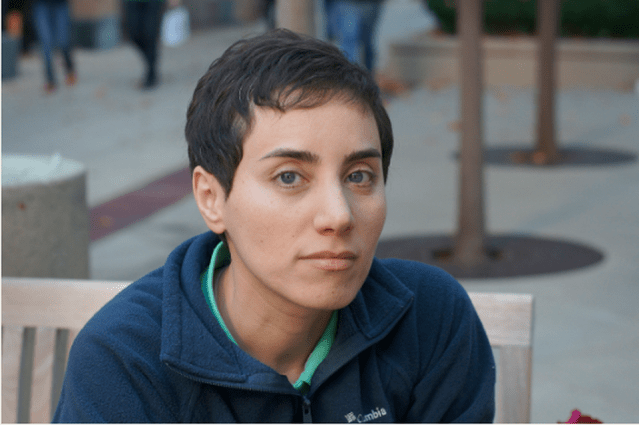
Filmed in Canada, Iran, and the United States, Secrets of the Surface: The Mathematical Vision of Maryam Mirzakhani examines the life and mathematical work of Maryam Mirzakhani, an Iranian immigrant to the United States who became a superstar in her field. In 2014, she was both the first woman and the first Iranian to be honored by mathematics’ highest prize, the Fields Medal. Read more
Trailer of the documentary here.
Also, Zala Films is supporting the May 12th initiative of the International Mathematical Union’s Committee for Women in Mathematics, which each year brings together virtual or local events celebrating women in mathematics. Due to COVID-19 (and by special agreement with Zala Films), individuals and organizations between April 1 and May 19, 2020, may access our film about the life and work of the Iranian mathematician Maryam Mirzakhani, Secrets of the Surface: The Mathematical Vision of Maryam Mirzakhani. (You can make a request for screening authorization here.)
For more information, visit www.msri.org/general_events/24654.
We are sharing information from http://zalafilms.com/secrets/

The idea of celebrating women in mathematics on Maryam Mirzakhani’s birthday, May 12, was proposed by the Women’s Committee of the Iranian Mathematical Society at the World Meeting for Women in Mathematics (WM)^2 in 2018. After being approved by hundreds of attendees at the meeting, the “May 12 Initiative,” often referred to simply as “May 12,” rose to a global and inclusive call to action, uniting several national and continental women-in-mathematics organizations worldwide. The fact that the original idea sparked an overwhelming response, resulting in more than one hundred events being organized in its inaugural year, showcases that the initiative fulfills a strong need. Read more
We recommend the article about 5 Great Books about Women in Mathematics!
Various processes in nature are characterized by irregular equations, in particular, evolution ones. Such equations could have chaotic and unexpected behaviours of the solutions, causing singularities. Therefore, they are natural in the sciences. Singularities could appear in different characteristics of the models such as coefficients and data. The initial conditions stand for the data for the evolution equations. By having data and coefficients less regular or, even singular, we are facing the difficulties outside of the tools of the classical analysis. For this, we are developing different approaches and technics to deal with. Here, we are more concentrated in such approaches and technics. One of the technics is hidden in the theory of regularisations. By regularising distributional initial data and coefficients, we arrive at the smooth enough operators. Their further study comes down to well-studied problems. One thing needs to be controlled a regularisation parameter. The Special Issue Singularities in Evolution Equations is collecting new results and trends on these problems.
Potential topics include, but are not limited to:
Authors are invited to submit original, unpublished papers. Simultaneous submission to other publication venues is not permitted.
Guidelines for authors are the same as for regular issues. The guidelines file is available at https://www.elsevier.com/journals/chaos-solitons-and-fractals/0960-0779?generatepdf=true.
When submitting papers, authors must select VSI: Evolution Equations as the article type.
Guest Editors
Dr. Michael Ruzhansky (Leading Guest Editor)
Ghent University
Email: Michael.Ruzhansky@UGent.be
Dr. Hemen Dutta
Gauhati University
Email: hemen_dutta08@rediffmail.com
Dr. Niyaz Tokmagambetov
Ghent University
Email: Niyaz.Tokmagambetov@UGent.be
If you work in analysis, there is also still a possibility to submit a paper to the (refereed) volume: Ashyralyev A., Kalmenov T., Ruzhansky M., Sadybekov M., Suragan D. (Eds.) Functional Analysis in Interdisciplinary Applications II, Springer Proceedings in Mathematics & Statistics, Springer, to appear
This volume is broader and not focused on the single topic as much as the special issue above. If you are interested in submitting a paper to this volume, please contact Dr Suragan
This ten part history of mathematics from Newton to the present day, reveals the personalities behind the calculations: the passions and rivalries of mathematicians struggling to get their ideas heard. Professor Marcus du Sautoy shows how these masters of abstraction find a role in the real world and proves that mathematics is the driving force behind modern science.
The story of two late 17th century mathematicians who worked on the same problem at the same time – the calculus – in which the great hero of British science, Newton, reveals himself to be a little less gentlemanly than his German rival, Leibniz. The calculus is one of the greatest achievements of mankind: an astronaut and an investment analyst pay homage to its enormous power. Listen here
how the mathematics that Leonard Euler invented two hundred years ago has transformed the internet. Euler’s solution to an 18th-century conundrum paved the way for the search engines most of us use every day. Listen here
The mathematics of Joseph Fourier. It’s thanks to his mathematical insight that you can hear Marcus on the radio and that Brian Eno can create sounds that have never been heard before. Listen here
How the mathematics of the French revolutionary, Evariste Galois, has proved invaluable to particle physicists working today.The mathematics that Galois began, over two hundred years ago, now absolutely describes the fundamental particles that make up our universe. Listen here
It was the German scientist and mathematician, Carl Friedrich Gauss, who said mathematics was the Queen of Science. One of his many mathematical breakthroughs, the Gaussian or normal distribution, is the lifeblood of statistics. It underpins modern medicine and is a valuable tool in the fight against prejudice. Listen here
The pioneering nineteenth century mathematicians who helped Albert Einstien with his maths: Jonas Bolyai, Nicolas Lobachevski and Bernhard Riemann. Without the mathematics to describe curved space and multiple dimensions, the theory of relativity doesn’t really work. Listen here
Georg Cantor, the mathematician who showed us how to carry on counting when the numbers run out. An insight into the nature of infinity that Roger Penrose believes helps to explain why the human brain will always be cleverer than artificial intelligence. Listen here
Henri Poincare, the man who proved there are certain problems that mathematics will never be able to answer: a mathematical insight that gave rise to chaos theory. Listen here
G.H.Hardy, the mathematician who insisted he had never done anything useful. And yet his work on the “diabolical malice” inherent in prime numbers inspired the millions of codes that now help to keep the internet safe. Listen here
The mathematician that never was, Nicolas Bourbaki. A group of French mathematicians, working between the two world wars and writing under the pseudonym Nicolas Bourbaki transformed their discipline and paved the way for several mathematical breakthroughs in the 21st century. Listen here
Info from BBC Radio 4
Terence Tao will be teaching online course Classical Fourier Analysis at UCLA from 30 March 2020.
Course covers the following topics:
Lecture notes will be made available on this blog.
More information:
https://ccle.ucla.edu/mod/page/view.php?id=2840550
https://terrytao.wordpress.com

During the last year we have secured several grants for our educational activities for (PhD) students and early career researchers.
Our grants for educational activities:
| 2020 | Flemish Government Seasonal School: Singularities in science and engineering (€23,000) | ||
| 2020 | Flemish Government Doctoral School: Wave equations and tsunami propagation (€3,650) | ||
| 2019 | Flemish Government Doctoral School: Inverse Spectral and Scattering Problems (€4,000) | ||
Here is the first one that we have just organised. The other two are still to come.

Doctoral School on Inverse Spectral and Scattering Problems, 27 February – 10 March 2020, Ghent University, Belgium


The Norwegian Academy of Science and Letters has decided to award the Abel Prize for 2020 to Hillel Furstenberg from Hebrew University of Jerusalem, Israel, and Gregory Margulis from Yale University, New Haven, CT, USA “for pioneering the use of methods from probability and dynamics in group theory, number theory and combinatorics.”
A biography of Hillel Furstenberg is here
A biography of Gregory Margulis is here
You can watch the interview with Hillel Furstenberg and Gregory Margulis
 Ghent Analysis & PDE Center