Classical Fourier Analysis by Terence Tao (online lecture)

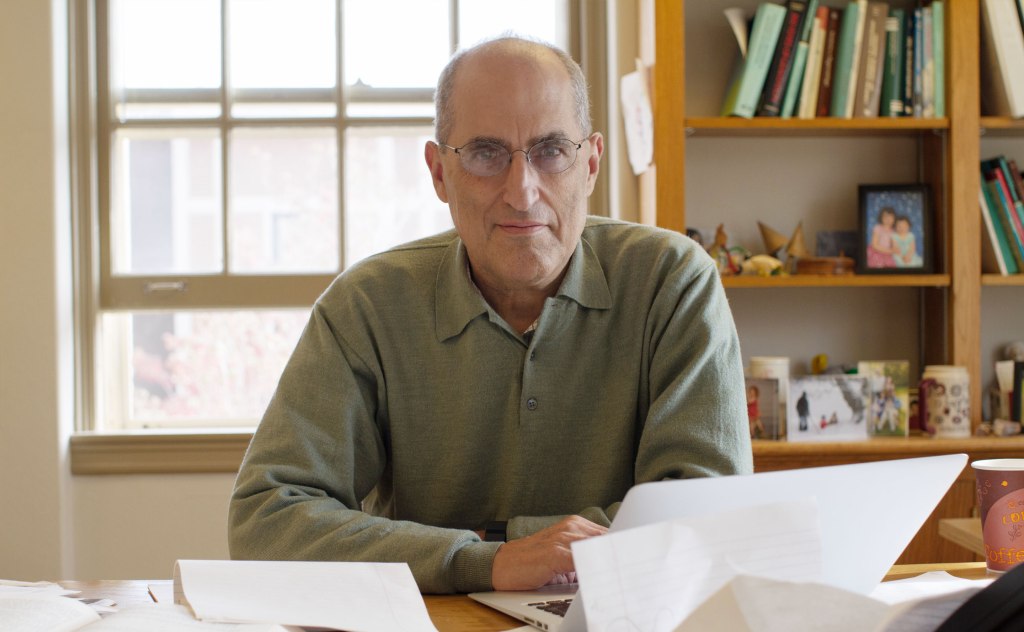
Terence Tao will be teaching online course Classical Fourier Analysis at UCLA from 30 March 2020. 

Course covers the following topics:

  • Restriction theory and Strichartz estimates
  • Decoupling estimates and applications
  • Paraproducts; time frequency analysis; Carleson’s theorem

Lecture notes will be made available on this blog.

  • The first class is Monday Mar 30.
  • Note for non-UCLA participants: You will be permitted to attend the Zoom lectures and to post comments on the blog (one can use this post in particular for general questions about the course). 

 Course info

  • Instructor: Terence Tao, tao@math.ucla.edu, MS 6183.  [Note for non-UCLA participants: I will not have time to respond to individual email inquiries about the class. Please use the blog for such inquiries.]
  • Lecture: MWF 2-2:50pm PT, held online at https://ucla.zoom.us/j/9264073849 .  Note that access to this Zoom meeting room may be restricted outside of lecture times, or used for other purposes (such as other online seminars).  Also, while I am not recording these classes, bear in mind that I cannot prevent the video for these rooms from theoretically being recorded by third parties.
  • Discussion section: N/A
  • Office Hours: Th 2-3:50pm PT, online at https://ucla.zoom.us/j/9264073849 In addition, students are encouraged to use the blog comment feature, as well as start discussions in the forum. [Note for non-UCLA participants: you have read-only access to the forum.  You can use the comment thread at this blog post as a substitute.]
  • Textbook: There is no required text; instead, lecture notes will made available on Terence Tao’s blog.  We will not directly follow these texts, but Demeter’s “Fourier Restriction, Decoupling, and Applications” and Muscalu-Schlag’s “Classical and multilinear harmonic analysis” (both volumes) will be relevant resources.  For Carleson’s theorem, this paper of Demeter (focusing on the slightly simpler Walsh model analogue of the theorem) can also be consulted.
  • Prerequisites: A high grade in Math 247A (such as the previous quarter’s class) is required for enrollment. [Note for non-UCLA participants: Math 247A covered the following topics: A_p weights and maximal and vector maximal functions, Calderon-Zygmund convolution kernels, Sobolev embedding, the Mikhlin multiplier theorem, the square function, Littlewood-Paley theory, fractional product and chain rules, and oscillatory integrals.]

More information:
https://ccle.ucla.edu/mod/page/view.php?id=2840550
https://terrytao.wordpress.com


Educational schools activities

During the last year we have secured several grants for our educational activities for (PhD) students and early career researchers.

Our grants for educational activities:

2020 Flemish Government Seasonal School: Singularities in science and engineering (€23,000)
2020 Flemish Government Doctoral School: Wave equations and tsunami propagation (€3,650)
2019 Flemish Government Doctoral School: Inverse Spectral and Scattering Problems (€4,000)

Here is the first one that we have just organised. The other two are still to come.

doctoralschoolsprofiel_hq_rgb_web
Doctoral School on Inverse Spectral and Scattering Problems
, 27 February – 10 March 2020, Ghent University, Belgium


flanders_horizontaal_

The Abel Prize Laureates 2020!

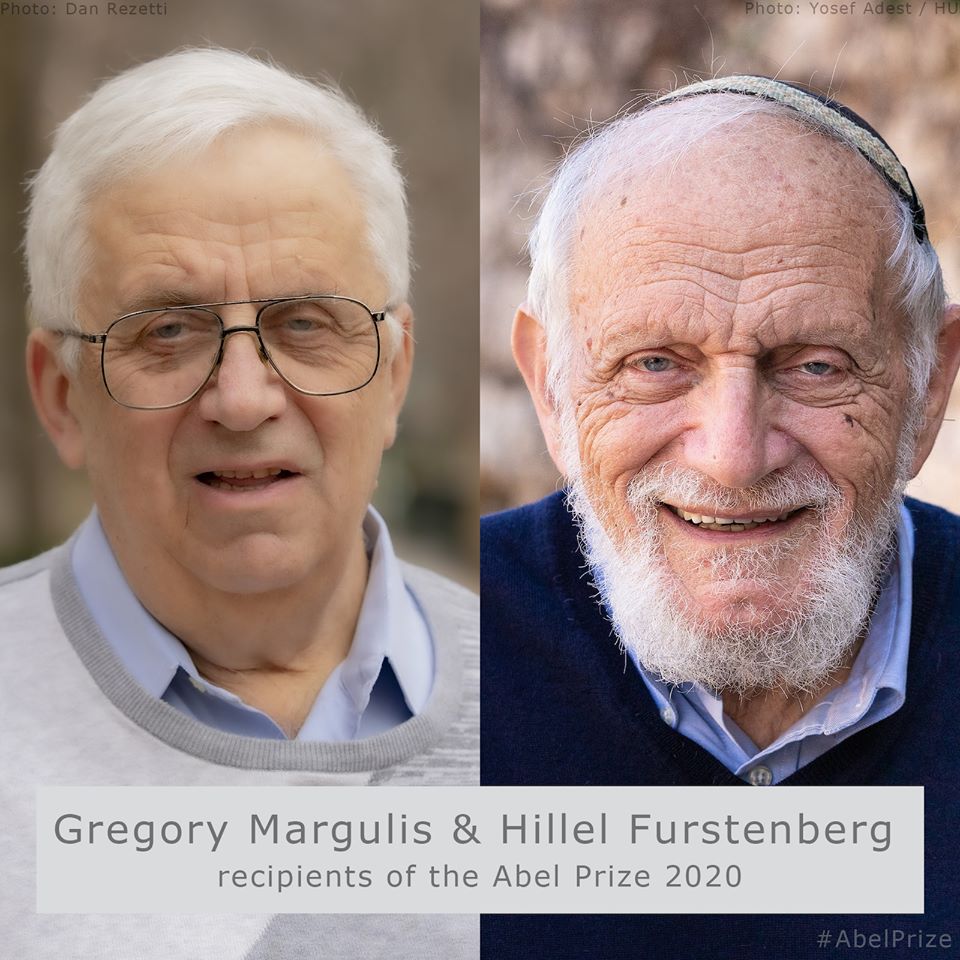
The Norwegian Academy of Science and Letters has decided to award the Abel Prize for 2020 to Hillel Furstenberg from Hebrew University of Jerusalem, Israel, and Gregory Margulis from Yale University, New Haven, CT, USA “for pioneering the use of methods from probability and dynamics in group theory, number theory and combinatorics.”

A biography of Hillel Furstenberg is here

A biography of Gregory Margulis is here

You can watch the interview with Hillel Furstenberg and Gregory Margulis

Info from The Abel Prize Laureates 2020 International Page

Happy Pi Day and International Day of Mathematics!

Official Logo of International day of Mathematics

40th session of the General Conference of the UNESCO in November 2019 has adopted the inaugural celebration of the the International Day of Mathematics on March 14, 2020.

The website of International Day of Mathematics is www.idm314.org

Mathematics is everywhere

  • Mathematics help plan and manage economic and social systems enabling the move towards a sustainable use of resources.
  • We travel the world guided by precise mathematical calculations based on the position of the sun, stars and GPS satellites.
  • We explore the inside of the human body through CT scans and MRI by building images out of numerical data through mathematical algorithms.
  • We discover how human thought works by building AI software that can learn and make decisions through mathematic models.
  • We photographed a black hole and continue exploring the edges of the universe with mathematics.

Info from www.mathunion.org

Happy International Women’s Day!

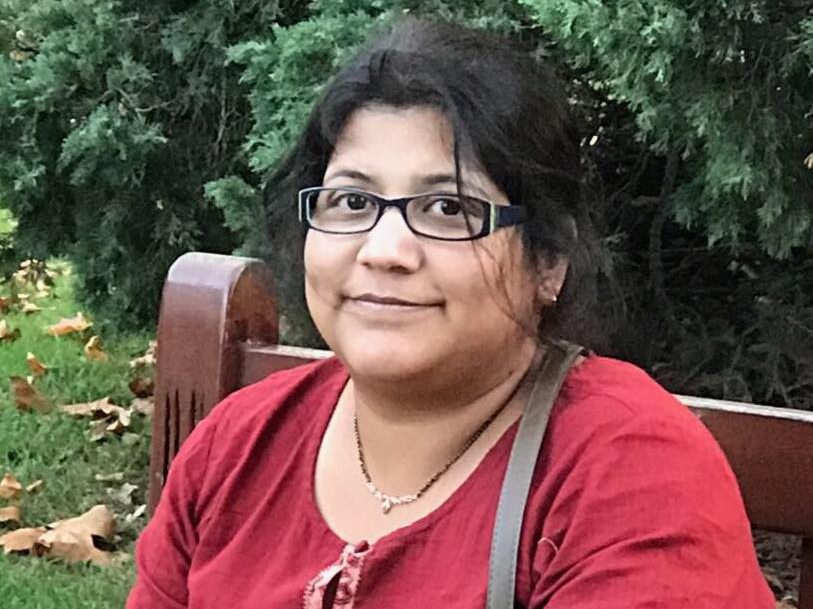
Today, at the International Women’s Day, we celebrate all women who are contributing to mathematics at our group and around the world. We are privileged to have these collaborations.  

Miss Linda Botchway was a MSc student at AIMS Ghana, now starting her PhD at the University of Ghana in Accra. She is working on the pseudo-differential calculus on the lattice and it’s applications.

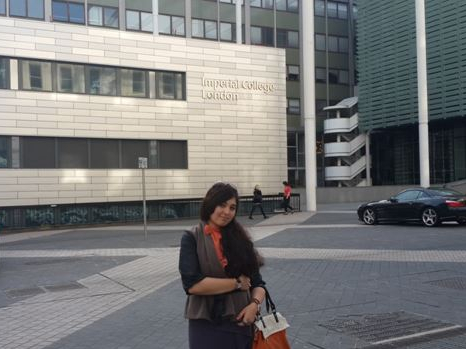
Marianna Chatzakou is a PhD Student at Imperial College London, currently under the supervision of Boguslaw Zegarlinski. Her thesis is to extend the pseudo-differential analysis explicitly available on the Heisenberg group to the context of Engel and Cartan groups, and to study the Poincare inequality on stratified groups. She is also working on the spectral and other properties of anharmonic oscillators.

Dr Aparajita Dasgupta was an Academic Visitor at Imperial College London, now a staff member at the IIT Delhi. Her research interest is in harmonic and functional analysis, and in the theory of pseudo-differential operators.

Aishabibi Dukenbayeva is a PhD Student at Ghent University. Her research interests are in Partial Differential Equations, (Non–local) Boundary Value Problems, Inverse (Spectral) Problems.

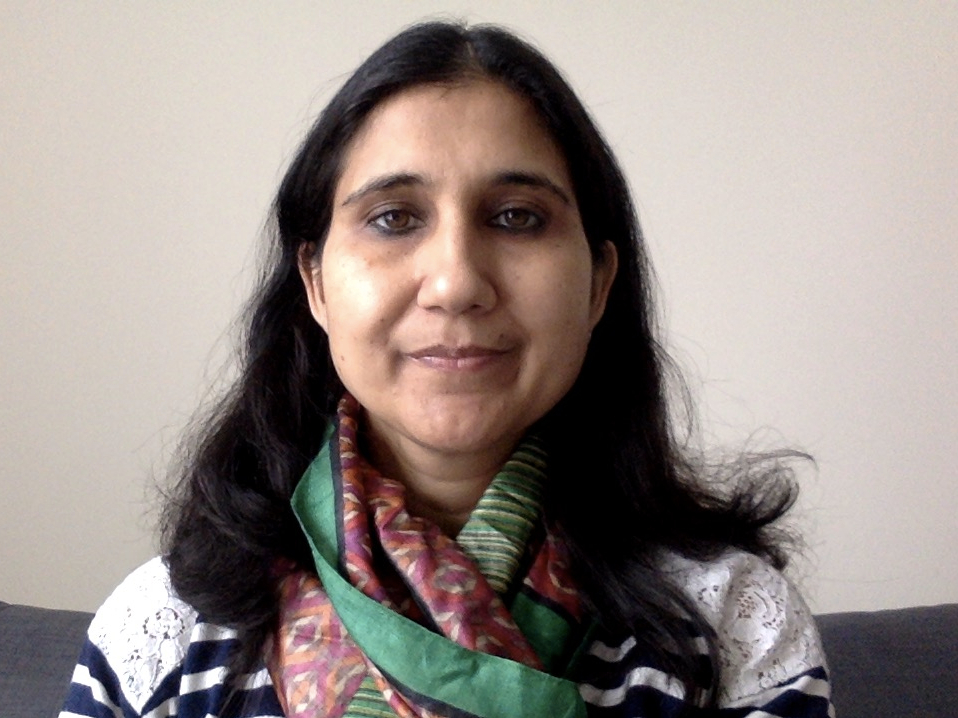
Dr Serena Federico is a Marie Curie Postdoctoral Fellow at Ghent University! Her research interest are in the analysis of fundamental lower bounds for partial differential operators on compact Lie groups, and on smoothing estimates for time-dependent evolution equations. She is also working in micro local analysis and pseudo-differential operators. 

Dr Véronique Fischer is a Senior Lecturer at the University of Bath. She deals with harmonic analysis and geometry of Lie groups and their representation theory, pseudo-differential operators, and geometric analysis.

Dr Claudia Garetto is a Senior Lecturer at Loughborough University. Her research focuses on hyperbolic equations and hyperbolic systems with singularities and multiplicities.

Dr Ljubica Oparnica is a Postdoctoral Fellow at Ghent University! Her research interest is mathematical analysis of intego-differential and partial differential equations, arising from mechanics.

Dr Daulti Verma is an Academic Fellow at Queen Mary University of London. Her research interests are Hardy inequalities in different forms. 

Dr Gulzat Nalzhupbayeva is a Senior Lecturer at Kazakh National University. Her research interests are Partial Differential Equations. 

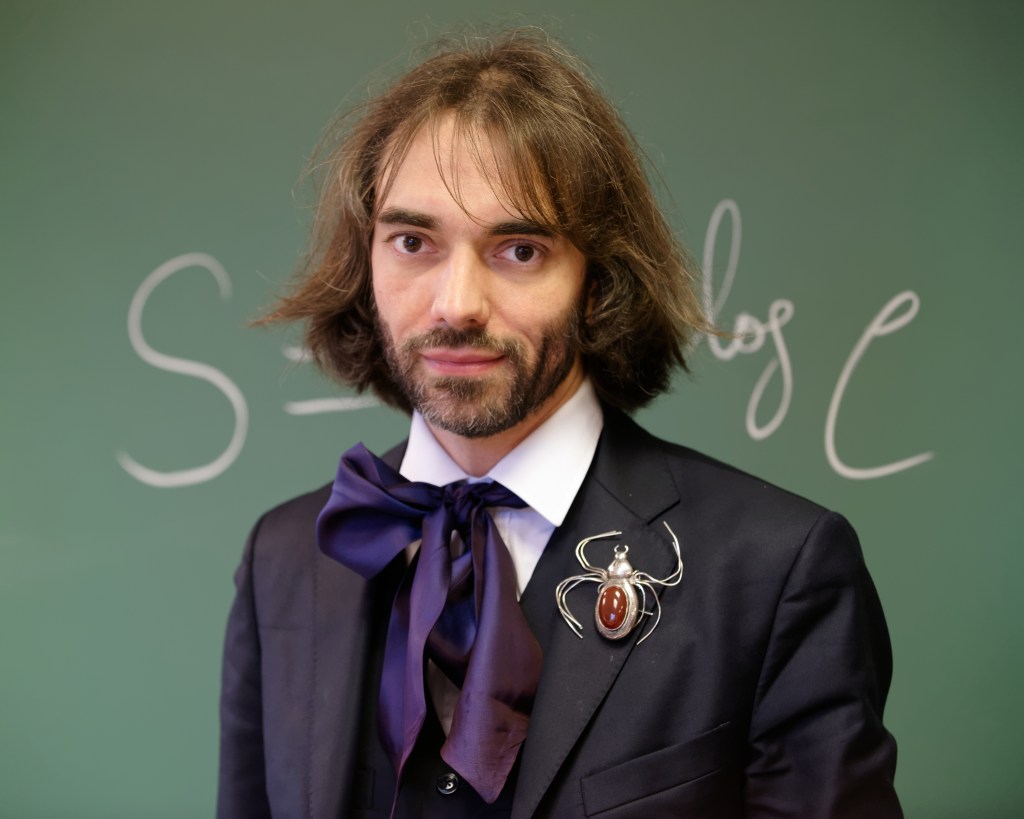
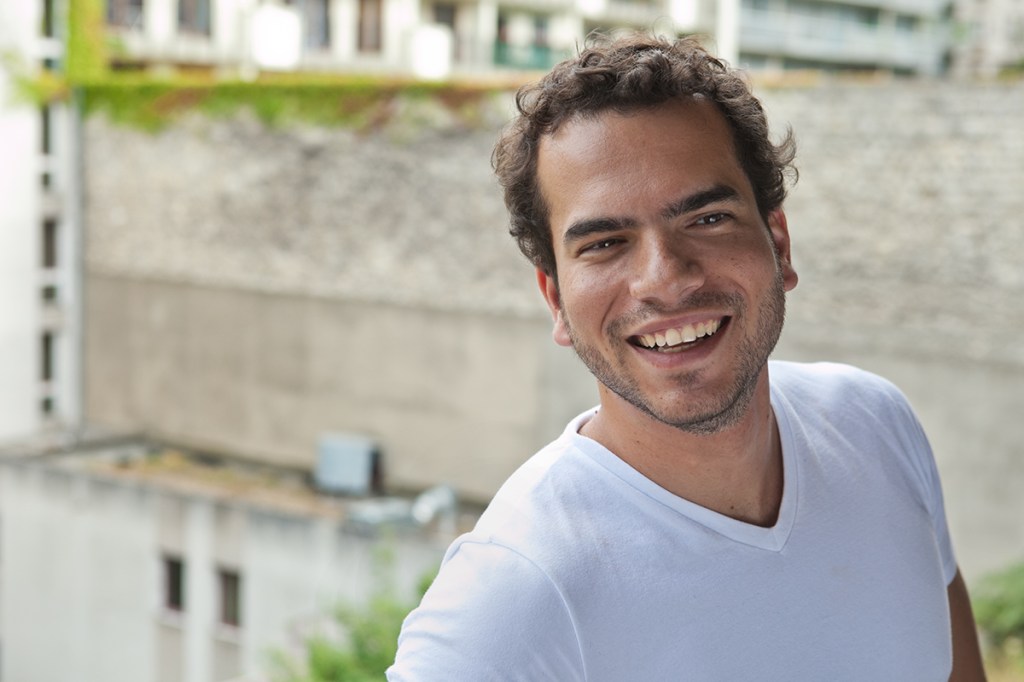
Informal conversation of Cédric Villani and Artur Ávila with Christoph Sorger

Two key figures in French mathematics, Cédric Villani, Fields medalist in 2010, and Artur Ávila, the French-Brazilian winner of the prestigious prize in 2014, engage in an informal conversation with Christoph Sorger, director of the CNRS National Institute for Mathematical Sciences and their Interactions (INSMI).

This conversation touches an aspect of a life after winning Fields medal, interactions with mass media, about Henri Poincaré, a culture of mathematics, and message to young researchers.

Please read here.

Could Physics and Mathematics One Day Unify?

By the twentieth century, mathematics had advanced into rather abstract realms, transcending its origins, which had been largely driven by questions closer to the natural world. Physics on the other hand, especially after the development of quantum mechanics, went in directions that were much harder for mathematicians to appreciate. Two of our speakers this afternoon, both Karen Uhlenbeck and Tom Lam, drew attention to the fact that it is actually extremely difficult for mathematicians to understand quantum field theory. And that’s been an enduring mystery.

Since quantum field theory has been increasingly central in physics since the late 1920s, that has created, just in the logic of mathematics and physics, a gulf between them. And that was enhanced after World War II. In the quarter-century after World War II, there was an incredible flood of discoveries in fundamental physics, so that the progress of physics was largely driven by experiment in a way that might not have made the subject seem too enticing to mathematicians, especially given that the mathematical foundations were so murky. That would be kind of a summary of where the world was when I was a student, for example.

When I was a student, a physics graduate student would not be exposed—I was not, and I think others would not have been either—to any ideas at all in contemporary mathematics or really even in twentieth- century mathematics, practically. Now, clearly, things have changed a lot since then. And one of the biggest reasons that things have changed is that when the Standard Model of particle physics developed, theory, in a way, had caught up with experiments. When the Standard Model was in place, it led physicists to ask new kinds of questions that weren’t possible before, without the Standard Model. And it made what physicists could potentially do more interesting mathematically.
So, definitely, this story has changed in the period since I was a graduate student. And string theory has also been an important part of that change. I would like to remark though that although there has been a huge change since I was a student, we shouldn’t exaggerate. There is also still a big separation, an almost inescapable separation, between the goals and nature of the two subjects.

Physicists usually are not much interested in the details of mathematical proofs, which means that usually even physicists might not really understand deeply the mathematical ideas that they are working with. And, on the other hand, since the difficulty for mathematicians to understand quantum field theory has endured, it remains extremely difficult for mathematicians to understand what physicists are really trying to do.—Edward Witten, Charles Simonyi Professor in the School of Natural Sciences, in conversation with Robbert Dijkgraaf, IAS Director and Leon Levy Professor

Published in The Institute Letter Fall 2019