Thanks to David Rottensteiner, with further help from Junqing Huang, for making our poster!
You can click on the poster below to see it in detail:

Intercontinental research group in Analysis and PDE centred at Ghent University


Thanks to David Rottensteiner, with further help from Junqing Huang, for making our poster!
You can click on the poster below to see it in detail:

A while ago we also started some research on medical imaging, deep learning, and more general computer imaging.
For a brief description of several projects see here
Some papers:
Huang J., Ruzhansky M., Feng H., Zheng L., Huang X., Wang H., Feature extraction for license plate location based on L0-norm smoothing. Open Comput. Sci. 2019; 9:28-135. link (open access)
Mamaeva S.N., Kononova I.V., Ruzhansky M., Nikiforov P.V., Nikolaevа N.A., Pavlov A.N., Fedorova N.F., Huang J., Semenova M.N., Barashkova D.V., Frolova L.S., Maksimov G.V., Using Scanning Electron Microscopy and Atomic Force Microscopy to Study the Formation of Nanoparticles on Red Blood Cell Surface in Cervical Cancer Patients, International Journal of Biomedicine, 10(1): 70-75, 2020. link to the article
Huang, J., Ruzhansky M., Wang, H. (2020). Weakly supervised learning photo enhancer with inexact training pairs. to appear


GF2020 International Conference on Generalized Functions
will be taking place during 31 August – 4 September 2020, at Ghent University, Belgium.
We are pleased to invite you to the International Conference on Generalized Functions (GF2020), to be held at Ghent University, Belgium, from August 31 to September 4, 2020. The conference is dedicated to the 70th birthday of Stevan Pilipović.
This conference continues a long-standing tradition of international conferences on generalized functions gathering researchers working in all branches of this field. The most recent conferences were held in Novi Sad (Serbia, 2018), Dubrovnik (Croatia, 2016), Southampton (United Kingdom, 2014), Martinique (France, 2011) and Vienna (Austria, 2009). The GF2020 aims at a broad coverage of research on generalized functions and their applications in and interactions with other areas of mathematics.
Keep an eye on the GF2020 Conference Website for useful information.
The conference is organised by the Department of Mathematics: Analysis, Logic and Discrete Mathematics. The head of the organising committee is Jasson Vindas, an expert on generalised functions, functional and wavelet analysis. For the full membership of the organisation committee, and for further information see here.

One of the recent directions in Generalised Functions: VERY WEAK SOLUTIONS


It is 10 years since the 7th ISAAC Congress took place in 2009 at Imperial College London.
The next, 13th ISAAC Congress, is planned to take place in 2021 at the Ghent University, Belgium.
☞ ☞ Download: ISAAC history 1996-2016 ☜ ☜
The announcements will follow in due course.


Our UGent PhD student Aidyn Kassymov has been awarded the very competitive stipend for talented young scientists by the Kazakhstan Government.
He was the only one receiving the award in this category in Mathematics. The full list of winners is available for
Two key figures in French mathematics, Cédric Villani, Fields medalist in 2010, and Artur Ávila, the French-Brazilian winner of the prestigious prize in 2014, engage in an informal conversation with Christoph Sorger, director of the CNRS National Institute for Mathematical Sciences and their Interactions (INSMI).
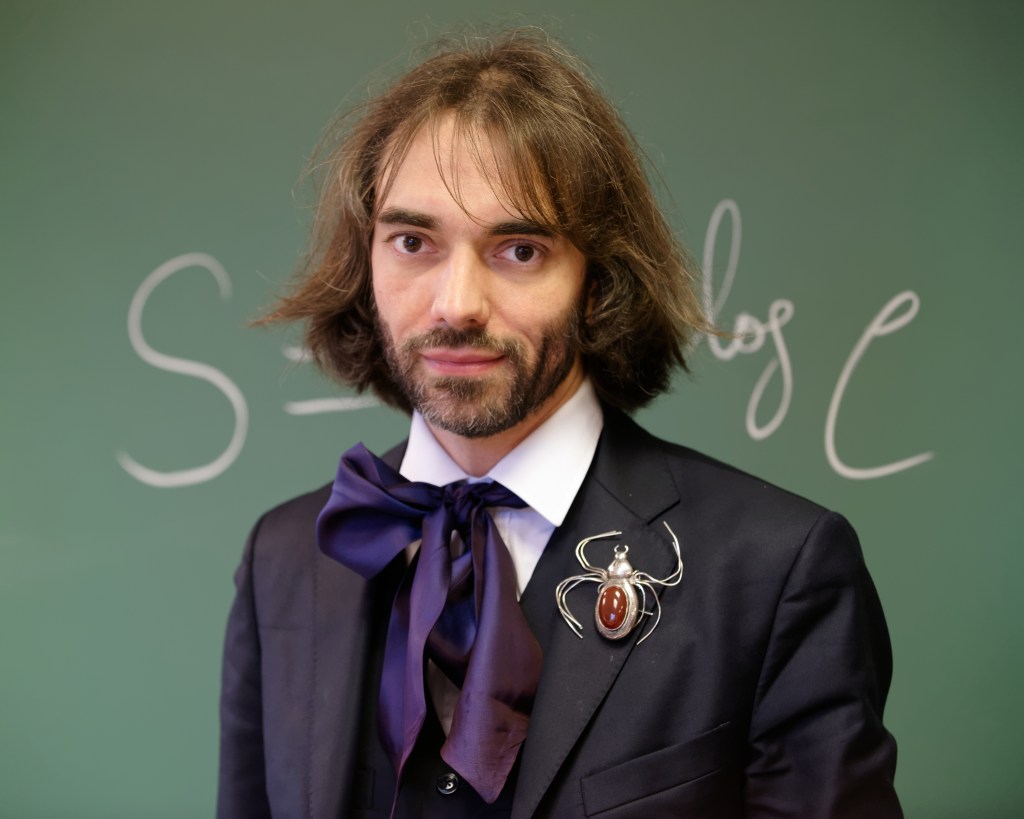

This conversation touches an aspect of a life after winning Fields medal, interactions with mass media, about Henri Poincaré, a culture of mathematics, and message to young researchers.
Please read here.
By the twentieth century, mathematics had advanced into rather abstract realms, transcending its origins, which had been largely driven by questions closer to the natural world. Physics on the other hand, especially after the development of quantum mechanics, went in directions that were much harder for mathematicians to appreciate. Two of our speakers this afternoon, both Karen Uhlenbeck and Tom Lam, drew attention to the fact that it is actually extremely difficult for mathematicians to understand quantum field theory. And that’s been an enduring mystery.
Since quantum field theory has been increasingly central in physics since the late 1920s, that has created, just in the logic of mathematics and physics, a gulf between them. And that was enhanced after World War II. In the quarter-century after World War II, there was an incredible flood of discoveries in fundamental physics, so that the progress of physics was largely driven by experiment in a way that might not have made the subject seem too enticing to mathematicians, especially given that the mathematical foundations were so murky. That would be kind of a summary of where the world was when I was a student, for example.
When I was a student, a physics graduate student would not be exposed—I was not, and I think others would not have been either—to any ideas at all in contemporary mathematics or really even in twentieth- century mathematics, practically. Now, clearly, things have changed a lot since then. And one of the biggest reasons that things have changed is that when the Standard Model of particle physics developed, theory, in a way, had caught up with experiments. When the Standard Model was in place, it led physicists to ask new kinds of questions that weren’t possible before, without the Standard Model. And it made what physicists could potentially do more interesting mathematically.
So, definitely, this story has changed in the period since I was a graduate student. And string theory has also been an important part of that change. I would like to remark though that although there has been a huge change since I was a student, we shouldn’t exaggerate. There is also still a big separation, an almost inescapable separation, between the goals and nature of the two subjects.
Physicists usually are not much interested in the details of mathematical proofs, which means that usually even physicists might not really understand deeply the mathematical ideas that they are working with. And, on the other hand, since the difficulty for mathematicians to understand quantum field theory has endured, it remains extremely difficult for mathematicians to understand what physicists are really trying to do.—Edward Witten, Charles Simonyi Professor in the School of Natural Sciences, in conversation with Robbert Dijkgraaf, IAS Director and Leon Levy Professor
Published in The Institute Letter Fall 2019

Axioms announced the establishment of Best Paper Award 2019. The purpose of the award is to recognize, promote, and support excellence within the field. The best paper will be selected after thorough evaluation by the journal Award Committee, and the winner will be announced in early 2020.

Mathematics supports a quarter of Dutch national income
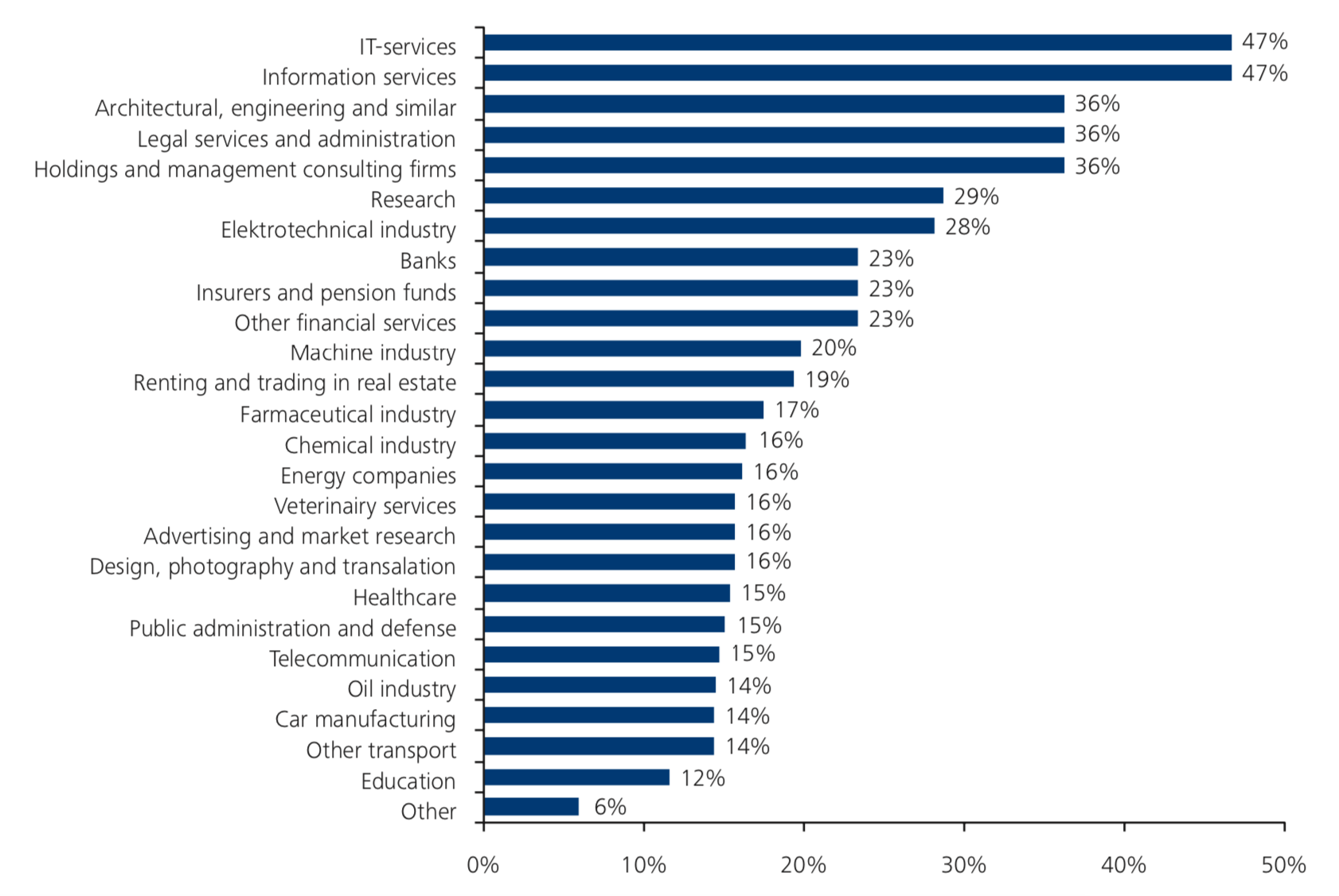
We are sharing an article from EMS Analysis and Vision Documents
Full article can be downloaded here DeloitteNL