The Abel Prize Laureates 2020!

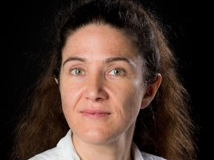
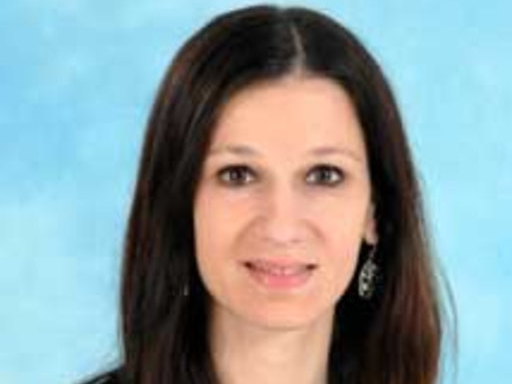
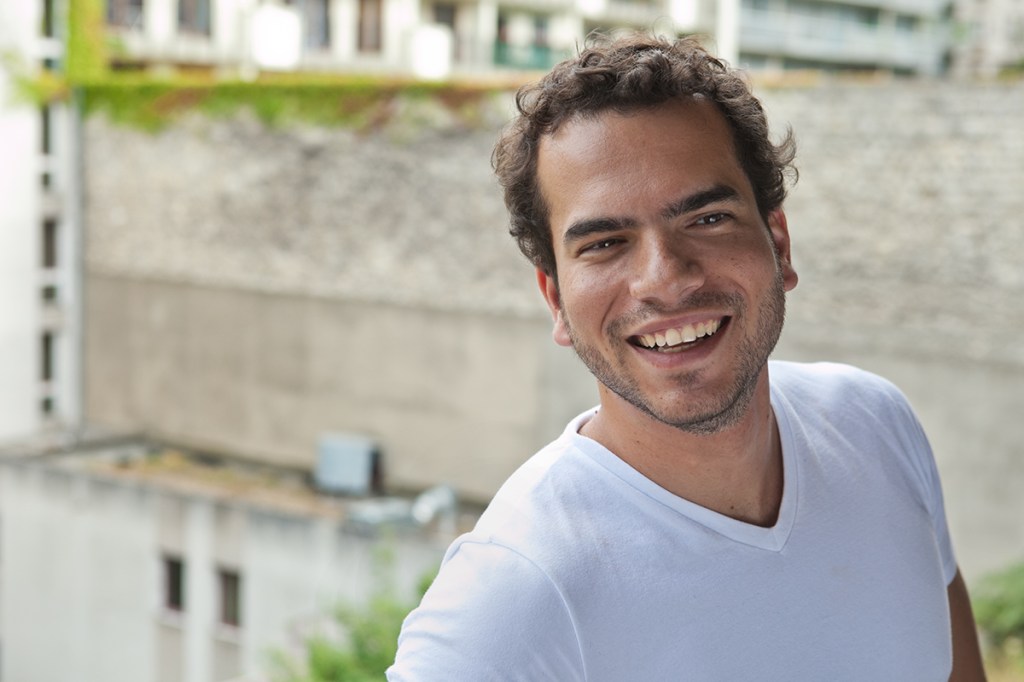
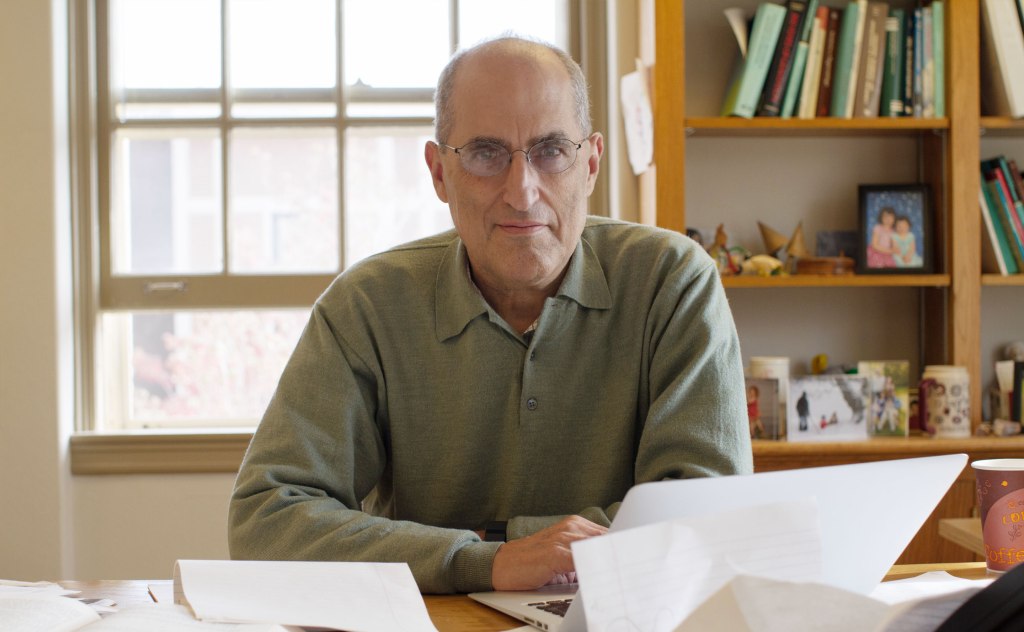
The Norwegian Academy of Science and Letters has decided to award the Abel Prize for 2020 to Hillel Furstenberg from Hebrew University of Jerusalem, Israel, and Gregory Margulis from Yale University, New Haven, CT, USA “for pioneering the use of methods from probability and dynamics in group theory, number theory and combinatorics.”

A biography of Hillel Furstenberg is here

A biography of Gregory Margulis is here

You can watch the interview with Hillel Furstenberg and Gregory Margulis

Info from The Abel Prize Laureates 2020 International Page

Happy Pi Day and International Day of Mathematics!

Official Logo of International day of Mathematics

40th session of the General Conference of the UNESCO in November 2019 has adopted the inaugural celebration of the the International Day of Mathematics on March 14, 2020.

The website of International Day of Mathematics is www.idm314.org

Mathematics is everywhere

  • Mathematics help plan and manage economic and social systems enabling the move towards a sustainable use of resources.
  • We travel the world guided by precise mathematical calculations based on the position of the sun, stars and GPS satellites.
  • We explore the inside of the human body through CT scans and MRI by building images out of numerical data through mathematical algorithms.
  • We discover how human thought works by building AI software that can learn and make decisions through mathematic models.
  • We photographed a black hole and continue exploring the edges of the universe with mathematics.

Info from www.mathunion.org

Happy International Women’s Day!

Today, at the International Women’s Day, we celebrate all women who are contributing to mathematics at our group and around the world. We are privileged to have these collaborations.  

Miss Linda Botchway was a MSc student at AIMS Ghana, now starting her PhD at the University of Ghana in Accra. She is working on the pseudo-differential calculus on the lattice and it’s applications.

Marianna Chatzakou is a PhD Student at Imperial College London, currently under the supervision of Boguslaw Zegarlinski. Her thesis is to extend the pseudo-differential analysis explicitly available on the Heisenberg group to the context of Engel and Cartan groups, and to study the Poincare inequality on stratified groups. She is also working on the spectral and other properties of anharmonic oscillators.

Dr Aparajita Dasgupta was an Academic Visitor at Imperial College London, now a staff member at the IIT Delhi. Her research interest is in harmonic and functional analysis, and in the theory of pseudo-differential operators.

Aishabibi Dukenbayeva is a PhD Student at Ghent University. Her research interests are in Partial Differential Equations, (Non–local) Boundary Value Problems, Inverse (Spectral) Problems.

Dr Serena Federico is a Marie Curie Postdoctoral Fellow at Ghent University! Her research interest are in the analysis of fundamental lower bounds for partial differential operators on compact Lie groups, and on smoothing estimates for time-dependent evolution equations. She is also working in micro local analysis and pseudo-differential operators. 

Dr Véronique Fischer is a Senior Lecturer at the University of Bath. She deals with harmonic analysis and geometry of Lie groups and their representation theory, pseudo-differential operators, and geometric analysis.

Dr Claudia Garetto is a Senior Lecturer at Loughborough University. Her research focuses on hyperbolic equations and hyperbolic systems with singularities and multiplicities.

Dr Ljubica Oparnica is a Postdoctoral Fellow at Ghent University! Her research interest is mathematical analysis of intego-differential and partial differential equations, arising from mechanics.

Dr Daulti Verma is an Academic Fellow at Queen Mary University of London. Her research interests are Hardy inequalities in different forms. 

Dr Gulzat Nalzhupbayeva is a Senior Lecturer at Kazakh National University. Her research interests are Partial Differential Equations. 

Informal conversation of Cédric Villani and Artur Ávila with Christoph Sorger

Two key figures in French mathematics, Cédric Villani, Fields medalist in 2010, and Artur Ávila, the French-Brazilian winner of the prestigious prize in 2014, engage in an informal conversation with Christoph Sorger, director of the CNRS National Institute for Mathematical Sciences and their Interactions (INSMI).

This conversation touches an aspect of a life after winning Fields medal, interactions with mass media, about Henri Poincaré, a culture of mathematics, and message to young researchers.

Please read here.

Could Physics and Mathematics One Day Unify?

By the twentieth century, mathematics had advanced into rather abstract realms, transcending its origins, which had been largely driven by questions closer to the natural world. Physics on the other hand, especially after the development of quantum mechanics, went in directions that were much harder for mathematicians to appreciate. Two of our speakers this afternoon, both Karen Uhlenbeck and Tom Lam, drew attention to the fact that it is actually extremely difficult for mathematicians to understand quantum field theory. And that’s been an enduring mystery.

Since quantum field theory has been increasingly central in physics since the late 1920s, that has created, just in the logic of mathematics and physics, a gulf between them. And that was enhanced after World War II. In the quarter-century after World War II, there was an incredible flood of discoveries in fundamental physics, so that the progress of physics was largely driven by experiment in a way that might not have made the subject seem too enticing to mathematicians, especially given that the mathematical foundations were so murky. That would be kind of a summary of where the world was when I was a student, for example.

When I was a student, a physics graduate student would not be exposed—I was not, and I think others would not have been either—to any ideas at all in contemporary mathematics or really even in twentieth- century mathematics, practically. Now, clearly, things have changed a lot since then. And one of the biggest reasons that things have changed is that when the Standard Model of particle physics developed, theory, in a way, had caught up with experiments. When the Standard Model was in place, it led physicists to ask new kinds of questions that weren’t possible before, without the Standard Model. And it made what physicists could potentially do more interesting mathematically.
So, definitely, this story has changed in the period since I was a graduate student. And string theory has also been an important part of that change. I would like to remark though that although there has been a huge change since I was a student, we shouldn’t exaggerate. There is also still a big separation, an almost inescapable separation, between the goals and nature of the two subjects.

Physicists usually are not much interested in the details of mathematical proofs, which means that usually even physicists might not really understand deeply the mathematical ideas that they are working with. And, on the other hand, since the difficulty for mathematicians to understand quantum field theory has endured, it remains extremely difficult for mathematicians to understand what physicists are really trying to do.—Edward Witten, Charles Simonyi Professor in the School of Natural Sciences, in conversation with Robbert Dijkgraaf, IAS Director and Leon Levy Professor

Published in The Institute Letter Fall 2019

Mathematical sciences and their value for the Dutch economy by Deloitte

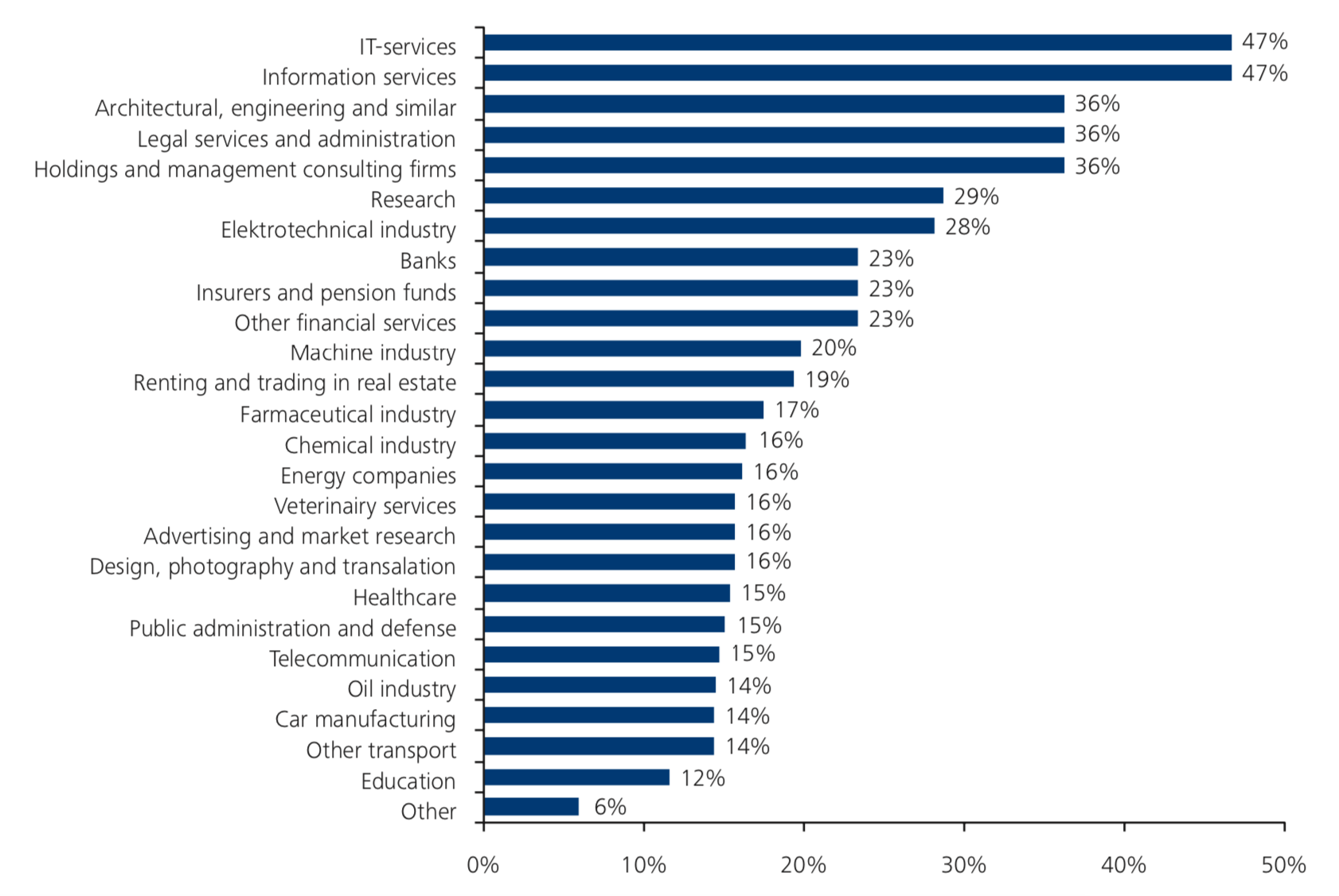
Mathematics supports a quarter of Dutch national income

The 900,000 mathematical sciences jobs contribute to the Dutch economy in three ways:

  • First, these jobs create income for the people who work in those jobs. This is called the direct effect.
  • Second, the industries where these people work, procure goods and services from other industries which in turn procure from other industries as well, and so on. The impact of these purchases is called the indirect effect.
  • Finally, the impact of the household spending resulting from direct and indirect effects of mathematical sciences jobs. This is called the induced effect.

Screen Shot 2019-11-16 at 12.08.33 AM
Top 25 industries by mathematical intensity in the Netherlands

We are sharing an article from EMS Analysis and Vision Documents

Full article can be downloaded here DeloitteNL


Fourier, One Man, Several Lives

      Fourier was born 250 years ago, twenty-one years before the French Revolution in 1789. The events of those troubled times turned his life into an adventure novel: the Revolution with its mortal dangers; Bonaparte’s expedition to Egypt with its discoveries; Fourier2later a political career as prefect of Isère at Grenoble, where Fourier wrote the first versions of the Théorie analytique de la chaleur, when he was not busy with the construction of the road from Grenoble to Turin or the drainage of marshland at Bourgoin; and finally, his academic role at the very heart of the Parisian scientific community during the years 1820–1830. While relating a variety of aspects which are not all of scientific concern, we shall, of course, dedicate an important space to the theory of heat, Fourier’s major work, as well as to the Fourier series, which are a crucial element of his mathematics.

1) The Revolution, the Egypt campaign
2) Grenoble, Paris, the work
3) 
Trigonometric series
4) 
Competition for heat, enmities
5) 
Parisian Life
6) 
Reception of His Work: Riemann
7) 
Mathematical Physics or Pure Mathematics?

Author of the article is Bernard Maurey (Sorbonne Université, Paris, France).


We are sharing an article from EMS Newsletter (September 2019).


Full article can be downloaded here Fourier, One Man, Several Lives